Chartreuse FAQ: Everything You Need to Know About the Green Liqueur Shortage
The Chartreuse shortage isn't due to supply chain issues or production problems—it's because the Carthusian monks made a conscious decision in 2021 to cap production at roughly 1.2 million bottles per year. Their reasoning? 'Making millions of cases does not make any sense in today's environmental context and will have a negative impact on the planet in the very short term.' The monks also wanted to 'protect their monastic life and devote their time to solitude and prayer' rather than scale up production to meet growing demand from the craft cocktail world.
Ever tried to buy a bottle of Chartreuse lately and walked away empty-handed? You’re not alone. Long gone are the days of Chartreuse shots on tap at the Passenger (RIP). The legendary green liqueur has become harder to find than concert tickets for Taylor Swift, and unlike other pandemic-era shortages, this one isn’t going anywhere anytime soon.
If you’ve been following along with our wine and spirits journey, you know that monks have been the unsung heroes behind some of our favorite beverages and foods. From the Benedictine monks who perfected the art of washed rind cheeses to Dom Pérignon (yes, he was a monk too!) revolutionizing Champagne, religious orders have been quietly crafting culinary perfection for centuries. And as we explored last week in our dive into what liqueurs actually are, these sweetened spirits occupy that perfect middle ground between wine and hard alcohol. The Carthusian monks behind Chartreuse are no different—except they’ve just made a decision that’s sent the cocktail world into a tailspin.
What Exactly Is Chartreuse?
Chartreuse is a French herbal liqueur so iconic that an entire color is named after it. Made by Carthusian monks since 1737, it’s based on a secret recipe from 1605 that includes 130 different herbs, plants, and flowers. The recipe was supposedly created by a medieval alchemist as an “elixir for long life”—and honestly, one sip of this complex, botanical masterpiece makes you believe it might actually work.
There are two main types:
- Green Chartreuse (110 proof): Fiery, intense, and herbaceous (essential for Last Word, Bijou, Alaska cocktails)
- Yellow Chartreuse (86 proof): Rounder, more honeyed, and approachable (known for Widow’s Kiss, Champs-Élysées, Yellow Jacket cocktails)
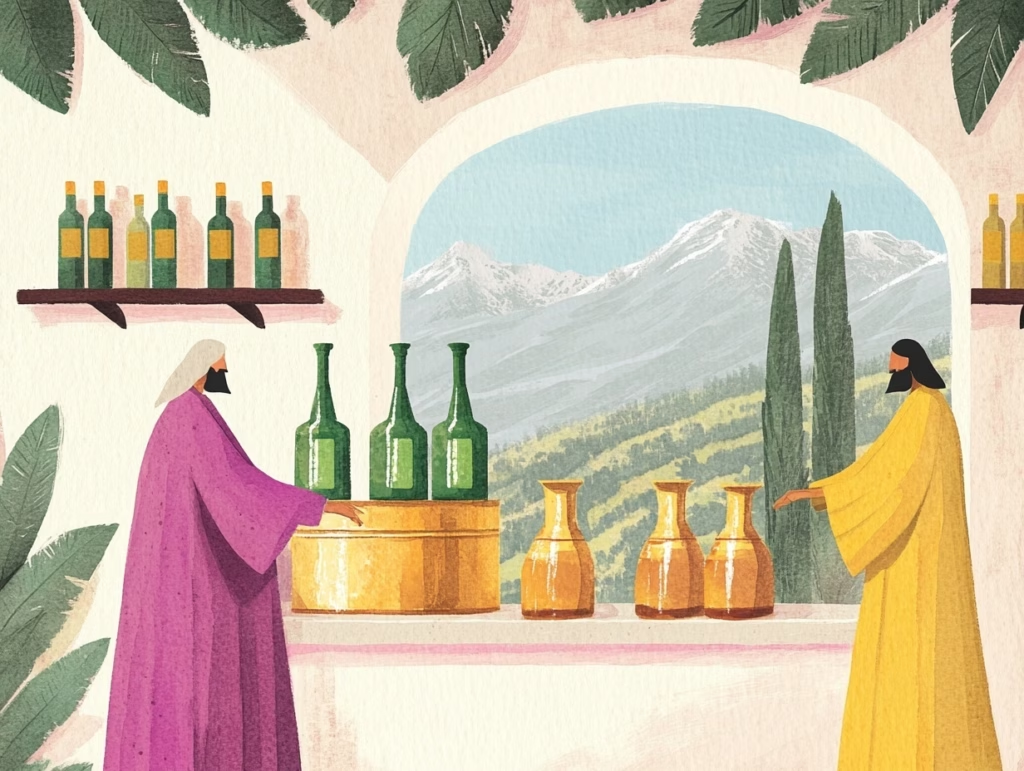
Both are made at the Grande Chartreuse monastery in the French Alps, and only a small handful of monks know the complete recipe at any given time.
Why Is There a Chartreuse Shortage?
The reason behind this scarcity is refreshingly unconventional: The shortage isn’t due to supply chain issues or production problems—it’s because the Carthusian monks made a conscious decision in 2021 to cap production at roughly 1.2 million bottles per year.
Their reasoning? As stated in their letter to distributors: “Making millions of cases does not make any sense in today’s environmental context and will have a negative impact on the planet in the very short term…Basically, we look to do less but better and for longer.”
The monks also wanted to “protect their monastic life and devote their time to solitude and prayer” rather than scale up production to meet growing demand from the craft cocktail world.
When Did the Shortage Start?
The monks quietly made their decision in 2021, but the effects are only just now being felt in 2022-2024. What happened was the craft cocktail renaissance of the early 2000s brought drinks like the Last Word (which relies heavily on green Chartreuse) back into fashion, creating unprecedented demand for a product made by monks who are more interested in maximizing prayer than profit margins.
Is the Shortage Real Everywhere?
The allocation shortage appears to be largely an American (or at least non-European) problem. Distribution isn’t exactly balanced across global markets, and the disparity is pretty striking.
On recent trips to France and Northern Italy, with the exception of airport Duty Free, I found shelves practically overflowing with both green and yellow Chartreuse—rows and rows of bottles just sitting there, totally available. Meanwhile, back in the US, cocktail enthusiasts are treating a single bottle like they’ve struck gold. Some Reddit users report “Green Chartreuse is MIA except at a certain liquor store” while others note “No shortage in the Maryland suburbs of D.C.” ¯\_(ツ)_/¯
The monks’ allocation strategy clearly favors their European home market (which, honestly, makes sense), leaving American bars and consumers scrambling for what’s left. So while the shortage is definitely real here, European travelers might be wondering what all the fuss is about.
How Much Does Chartreuse Cost Now?
Surprisingly, the monks aren’t jacking up prices to capitalize on scarcity. As their global sales director explained: “Other brands might restrict the product they make, but that’s often to make it more rare and command a higher price. That’s not what’s happening here…We just want to have a fair price for the liqueur, to recognize what is behind it in terms of work and expertise.”
However, secondary market prices have definitely increased, and some retailers are charging premium prices when they can get their hands on bottles.
Will Production Ever Increase Again?
Don’t hold your breath. The monks capped production at 1.9 million bottles per year starting in 2019, and they’ve shown no signs of changing their minds. This isn’t a temporary supply chain issue—it’s a philosophical stance by a religious order that values sustainability and spiritual life over market demands.
What Are the Best Chartreuse Alternatives?
Several producers have stepped up to fill the void:
Dolin Génépy
Also made in the French Alps with similar sage and herbal notes, but lighter and more delicate than Green Chartreuse. Great for cocktails where you want that alpine herb profile without the intensity.
Strega
Italian liqueur made with 70 herbs and spices that’s bright yellow rather than green. Sweeter and more saffron-forward than Chartreuse, with a distinct anise note.
Faccia Brutto Centerbe
Brooklyn-made “Italian take on Chartreuse” that translates to “one hundred herbs.” More earthy and less sweet than the original, with pronounced mint and eucalyptus notes.
Boomsma
Dutch herbal liqueur that works surprisingly well in cocktails. Less complex than Chartreuse but maintains that herbaceous backbone with a cleaner, more straightforward flavor profile.
Straightaway Cocktails Flora Green
Specifically designed as a Chartreuse alternative with Pacific Northwest botanicals. More piney and resinous than the French original.
Brucato Chaparral
Uses California chaparral herbs for a uniquely American take that’s earthier and more medicinal.
Elixir Craft Spirits Ver
Another Pacific Northwest interpretation that emphasizes local herbs and has a brighter, more citrusy profile.
Can You Still Make a Last Word Without Chartreuse?
Absolutely! Creative bartenders have adapted by:
- Using Aperol instead of Chartreuse (calling it “The First Word“)
- Substituting other herbal liqueurs like Génépy or Strega (see options above)
- Creating entirely new riffs that capture the drink’s spirit
Should You Buy Chartreuse If You Find It?
If you’re a cocktail enthusiast and spot a bottle, probably yes. As one industry expert noted: “if you come across a bottle, you should probably bring it home with you”. But don’t hoard—buy what you’ll actually use and appreciate.
What Makes Chartreuse So Special?
Beyond its scarcity, Chartreuse is genuinely unique. It’s “one of the few spirits that changes and evolves” with 130 natural botanical ingredients, and vintage bottles from different eras can taste remarkably different. Some of the rarest bottles from the monks’ period of exile in Spain (1903-1980s) now sell for over $1,000.
The Bottom Line
The Chartreuse shortage is a fascinating example of an ancient religious order refusing to compromise their values for modern market pressures. While it’s frustrating for cocktail lovers, there’s something refreshingly authentic about monks who prioritize mission over margins.
The initial panic buying seems to be calming down as people adapt to the new reality. Bartenders have found creative alternatives, hoarding has slowed, and the market is finding its balance. The shortage has sparked innovation in the spirits world and forced everyone to think beyond classic recipes.
Whether the monks will ever change their minds remains to be seen, but for now, this is the new normal for Chartreuse availability.