Cooking with Wine: Your FAQ Guide to Not Screwing Up Date Night Dinner
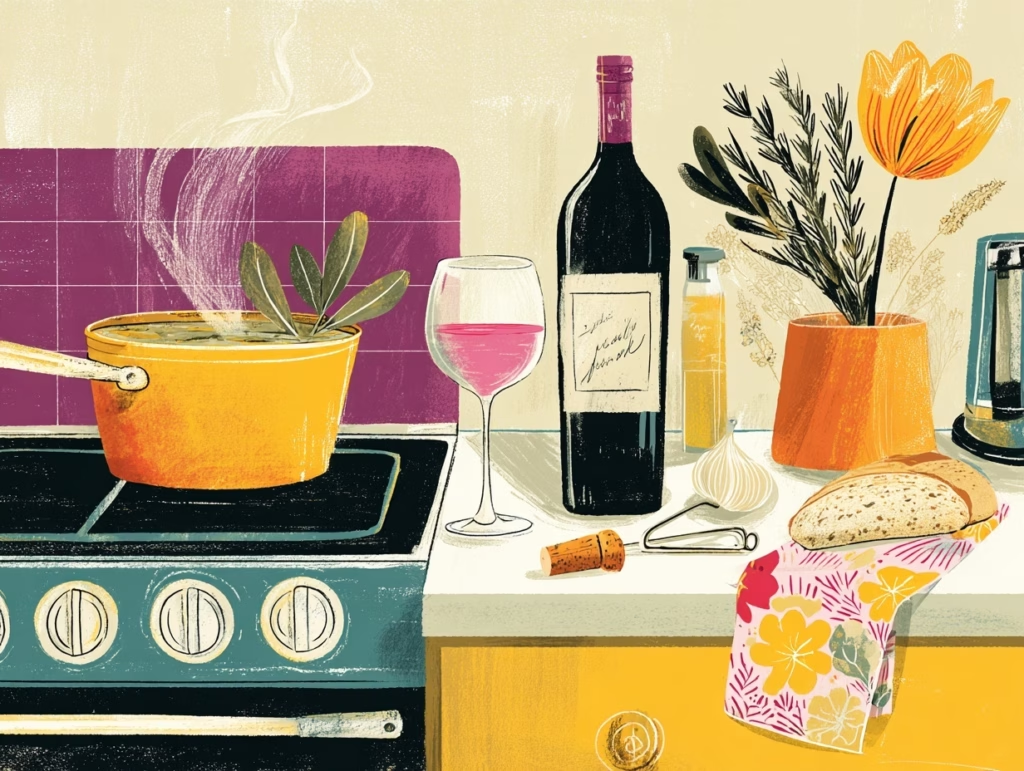
Everything you need to know about cooking with wine—from which bottles to buy to whether that fancy Burgundy is actually worth pouring in your pasta sauce
We’ve all been there: standing in the kitchen, recipe calling for “1/2 cup dry white wine,” wondering if you should crack open that $50 bottle you’ve been saving or grab the $8 one with the screw cap.
Let’s clear up the confusion about cooking with wine once and for all.
Do I Really Need to Use Wine I’d Actually Drink?
Short answer: Kind of, sort, of not really.
Here’s the thing: you’ve probably heard “never cook with wine you wouldn’t drink.” It sounds sophisticated, but it’s not the whole story. The real rule should be: don’t cook with wine that tastes actively bad, but you also don’t need wine that’s actually good.
Think of it like this—cooking wine is the Zara of your wine wardrobe. You wouldn’t wear it to a gala, but you’d absolutely wear it to brunch (and look great doing it).
When wine hits a hot pan, all those subtle terroir-driven nuances that make a $50 Burgundy special? They basically disappear. What remains are the basic characteristics: acidity, body, sweetness level, tannins, and general flavor profile.
The sweet spot: Wine that’s drinkable but not special. Think $8-20 range—fine quality without any flaws.
What Makes a Good Cooking Wine?
Focus on these key attributes rather than prestige or price:
For Red Wines:
- Medium to full body with some structure
- Dry, not sweet (unless the recipe specifically calls for it)
- Moderate tannins (super-tannic wines can turn bitter)
For White Wines:
- Crisp and dry (sweet white wines in savory dishes = disaster)
- Good acidity to brighten and balance
- Light to medium body
Red flags to avoid:
- Anything labeled “cooking wine” with added salt
- Sweet wines (unless specifically for desserts)
- Oxidized or spoiled wine
- Super oaky wines (that vanilla-bourbon thing can go weird in cooking)
Which Wines Should I Actually Buy?
Let’s make this stupid simple:
Best Budget Reds for Cooking:
- Cabernet Sauvignon or Merlot blends – beef stews, braises
- Côtes du Rhône – all-purpose red, begs for a coq au vin
- Basic Pinot Noir – when recipes call for lighter red
Best Budget Whites for Cooking:
- Pinot Grigio – clean and bright, the MVP of cooking whites
- Sauvignon Blanc – perfect for seafood and cream sauces
- Dry Vermouth – lasts forever in your fridge!
- Unoaked Chardonnay – good for richer dishes
💡 Pro tip: Keep dry vermouth in your fridge. It lasts for months and works perfectly in most recipes calling for white wine.
Does More Expensive Wine Make Food Taste Better?
No, more expensive wine does not automatically make better food.
When you cook with wine, the alcohol evaporates, acids concentrate, and flavors meld with your ingredients. All those delicate characteristics that justify a wine’s $50 price tag get steamrolled by garlic, onions, tomatoes, and heat.
When slightly better wine matters:
- Wine-forward sauces and reductions
- Recipes where wine isn’t cooked long
- Dishes with very few other ingredients
When it doesn’t matter:
- Long braises and stews (3+ hours)
- Heavily spiced dishes
- Marinades (seriously, save your money)
Can I Use That Half-Empty Bottle?
It depends…
Use opened wine for cooking if:
- It’s been less than a week (white wine in fridge) or 3-5 days (red wine)
- It still smells like wine, not vinegar
- It doesn’t taste actively unpleasant
This is actually perfect for the “I only need 1/2 cup” problem. Use what you need for cooking, drink a glass with dinner, save the rest for your next recipe.
What About Grocery Store “Cooking Wine”?
Hard pass.
Those bottles labeled “cooking wine” contain added salt and preservatives that make them taste terrible and give you zero control over seasoning. Even a $9 bottle of real wine is infinitely better.
Quick Reference Cheat Sheet
| Dish Type | Best Wine Choice | Why it Works |
| Beef stew, short ribs, pot roast | Medium-bodied red (Cab, Merlot, Côtes du Rhône) | Adds depth and richness to long braises |
| Adds depth and richness to long braises | Pinot Noir | Lighter red won’t overpower delicate flavors |
| Bolognese, Italian red sauces | Chianti or Sangiovese | Complements tomato-based dishes |
| Seafood, light cream sauces | Pinot Grigio or Sauvignon Blanc | Crisp acidity brightens flavors |
| Risotto, chicken piccata | Dry white wine or vermouth | Clean flavor won’t compete with dish |
| French cream sauces | Unoaked Chardonnay | Body matches richness of cream |
| Mussels, clams | Sauvignon Blanc | High acidity cuts through brininess |
| Wine reductions | Slightly nicer wine | Concentrated flavor means quality matters more |
TL;DR:
If you’re opening a nicer bottle that pairs well with your dish anyways, by all means throw half a cup into your recipe. You’ll appreciate the complement. But don’t feel like you need to open something special just to cook with. Keep the following pointers in mind and you’ll be just fine:
- Use drinkable wine, not necessarily special wine ($8-20 sweet spot)
- Focus on dry vs. sweet, appropriate body, good acidity
- Expensive wine won’t make your food taste expensive
- Avoid grocery store “cooking wine” with added salt
- Leftover wine that’s slightly oxidized is fine for cooking, vinegar is not
- Dry vermouth is your secret weapon
Your beef bourguignon doesn’t need a $60 Burgundy to be delicious. It needs good technique, quality ingredients, and enough wine—any decent wine—to build flavor.
Now go forth and deglaze with confidence!