Dolcetto: Piedmont’s Velvet Rebel
Part 3 of our Piedmont’s Leading Ladies Series

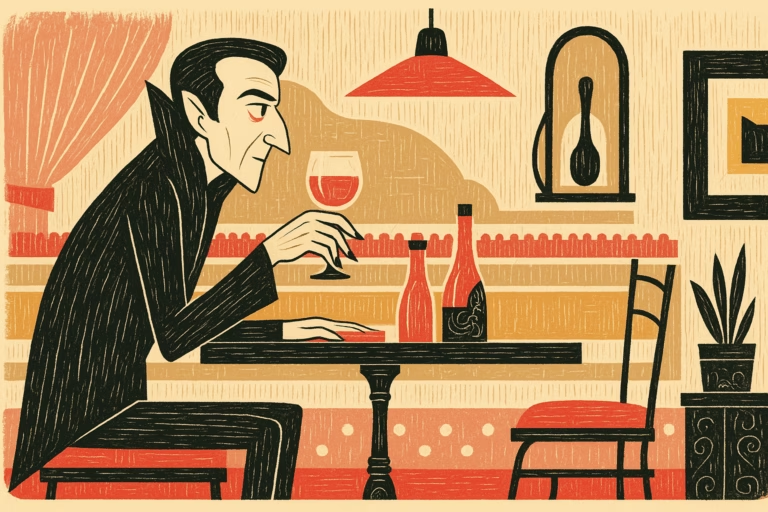
In the power trio of Piedmont grapes, Dolcetto plays the part of the cool aunt—the youngest of the bunch, less celebrated than powerful Barolo or Barbaresco (both Nebbiolo) or vibrant Barbera, but arguably the most fun. She shows up in a silk smoking jacket and velvet loafers, with few expectations and a lot to say. She’s the one who rolls her eyes at formal dinners, then sneaks you a glass of something good in the kitchen. Low-key and low-maintenance, Dolcetto doesn’t demand much—no cellaring, no decanting, no ceremonial handling—but she still brings big vibe. She just wants to be poured, sipped, and appreciated for who she is: dark, juicy, and deeply comforting.
Despite a name that translates to “little sweet one,” Dolcetto is almost always vinified dry. The sweetness lies more in her temperament than her sugar content. This is a wine that offers immediate pleasure—dark berries, velvety texture, and a whisper of almond skin bitterness on the finish that keeps things interesting. While she may lack the cult clout of her Nebbiolo sibling, Dolcetto is a wine that’s built to pair with your next Italian cooking night.
🤔 Food for Thought: Dolcetto’s relative obscurity outside Italy may have less to do with her flavor and more to do with branding. Despite being dry, her name—”little sweet one”—misleads many American drinkers into thinking she’s sugary (i.e., outdated). But Dolcetto is anything but sweet. She’s dry, nuanced, and ready to reclaim her name.
How to Recognize Dolcetto in a Tasting
Dolcetto’s beauty lies in her clarity and charm. Unlike some red grapes that need coaxing or age to reveal themselves, Dolcetto walks into the glass fully formed—aromatic, inviting, and ready to make an impression. She’s medium-bodied but plush, often with an inky hue that belies her soft acidity.

In the glass, look for:
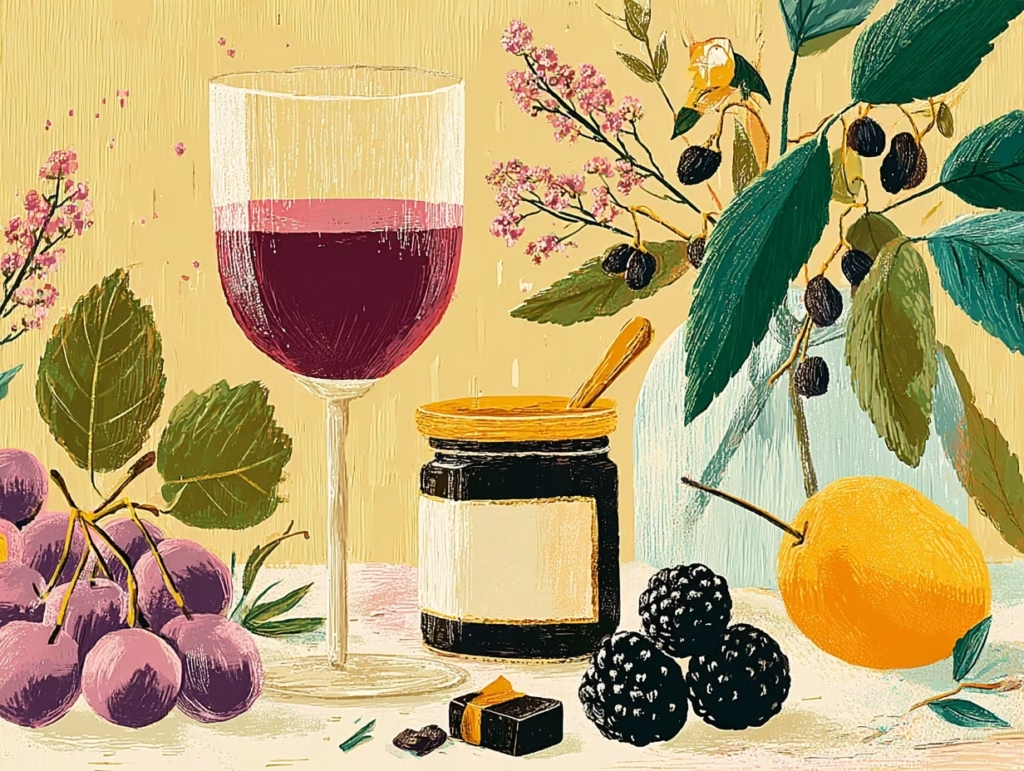
- Fruit: Black cherry, blueberry compote, ripe plum, and sometimes a splash of boysenberry or blackberry
- Floral & Earth: Violets, licorice, cocoa powder, dried herbs, and hints of black tea or forest floor
- Texture & Structure: Gentle to moderate tannins that wrap the palate like velvet, and relatively low acidity—especially compared to the electric zip of Barbera
- Finish: Clean and dry, often with a lightly bitter almond note or faint savory edge that adds a grounding counterpoint to the fruit
The balance of soft tannin and low acid makes Dolcetto deceptively versatile—equally at home with rich tomato sauces, grilled sausages, and hard cheeses. She’s a red wine that doesn’t mind being chilled slightly on a hot day, and she never takes herself too seriously.
Dolcetto versus Merlot

If Dolcetto’s tasting notes remind you of Merlot, you’re not alone. Merlot and Dolcetto can both come across as soft, plush reds—but they diverge in some key sensory ways once you swirl, sniff, and sip. Here’s how to tell who’s in your glass:
Dolcetto: Bright but dark-toned—think black cherry, blueberry, plum, and sometimes a touch of boysenberry or licorice. She often shows notes of cocoa, black tea, dried herbs, and a distinct bitter almond note on the finish—especially in traditional Piedmont styles. Her fruit feels fresh but with a rustic edge. Medium-bodied, but with an earthy or angular grip. Low acidity, moderate tannins. She’s plush but doesn’t zing—there’s softness, but also a little snap at the end.
Merlot: Riper, rounder fruit—black cherry, blackberry, plum, often with hints of chocolate, mocha, or fig, especially in warmer climates. Commonly expresses cedar, mocha, sweet spice, or wet leaves—especially if oak-aged. Medium to full-bodied, with a lusher, smoother mouthfeel—especially in New World examples. Moderate acidity, moderate tannins.
Here’s a cheat sheet to help tell the two apart in a tasting:
| Trait | Dolcetto | Merlot |
| Acidity | Low | Moderate |
| Tannins | Moderate | Moderate |
| Fruit profile | Black cherry, blueberry, cocoa | Black cherry, plum, chocolate |
| Finish | Dry, often with almond bitterness | Smooth, soft, sometimes mocha-tinged |
| Texture | Rustic, grippy | Plush, polished |
| Body | Medium | Medium to full |
How She’s Grown and Made
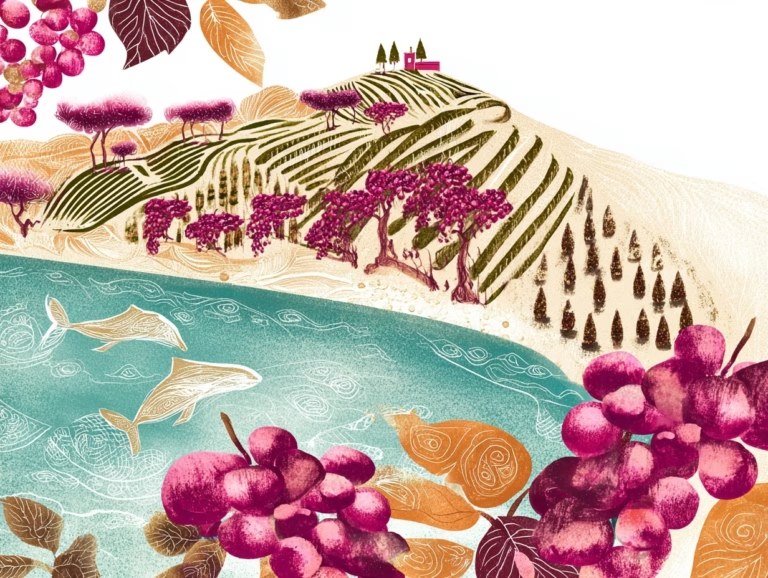
Dolcetto thrives in the rolling hills of Piedmont, where she ripens earlier than both Nebbiolo and Barbera. That timing has historically made her a favorite among growers, especially in cooler vintages. Though she’s often planted on less exalted sites—leaving the prime south-facing slopes to her more commercially prestigious siblings—Dolcetto still finds ways to shine.
Viticulturally, Dolcetto can be somewhat finicky. She prefers calcareous clay or limestone-marl soils that offer good drainage and a steady balance of nutrients. Overly fertile sites or alluvial valley floors tend to dilute her rich personality. She’s typically planted on cooler, less sunny slopes that are unsuitable for Nebbiolo, who needs more hang time to ripen fully. Where Nebbiolo gets the crown-jewel terraces and Barbera commands mid-slope expanses, Dolcetto is content in the high or shaded parcels that still allow her early-ripening nature to flourish.

In the cellar, Dolcetto is usually handled with a gentle touch. The goal is to showcase her fruit purity and soft texture:
- Fermentation: Short, with stainless steel or neutral vessels to preserve aromatic freshness
- Aging: Minimal—often just a few months in steel or old oak; though longer aging in select bottlings can reveal surprising complexity
- Blending: Rarely done. Dolcetto has a singular voice, and winemakers rarely interrupt her solo.
Because of her naturally lower acidity and approachable tannins, she’s usually best enjoyed within 3–5 years—though versions from Dogliani and Diano d’Alba can go longer.
Where She Grows and What Changes
Dolcetto’s heart and soul live in Piedmont, where she stars in several DOC and DOCG zones. Three in particular define her range:
- Dolcetto d’Alba: The most common and exported version. These wines are soft, fruit-forward, and plush, delivering juicy cherry and plum notes with a gentle finish. Think: comfort food in a glass.
- Dolcetto di Diano d’Alba: Grown in a slightly higher elevation zone, these wines show more lift and minerality, with tighter structure and subtle floral notes. The middle ground between Alba’s ease and Dogliani’s intensity.
- Dogliani DOCG: The most serious expression of Dolcetto. In the elevated vineyards of southern Langhe, she develops structure, tannin, and depth. Expect darker fruit, licorice, black tea, and dried herbs. Age-worthy and intellectual, but still sensuous.
Outside of Italy, Dolcetto remains a niche experiment. Producers in California’s Mendocino and Australia’s King Valley lean into her fruit and drinkability, though they often lack the soil-driven tension found in Piedmont.
Piedmont’s Leading Ladies: A Comparison
| Grape | Acidity | Tannins | Body | Common Flavors | Ageability |
| Nebbiolo | High | High | Medium to Full | Rose, tar, cherry, anise, leather | 10–30 years+ |
| Barbera | High | Low | Medium | Red cherry, blackberry, spice | 3–10 years |
| Dolcetto | Low | Moderate | Medium | Black cherry, cocoa, almond skin | 2–7 years |
Final Thoughts: The Velvet Rebel
Dolcetto doesn’t need fanfare to make an impression. She’s happy in her vintage velvet and floral-print silks—effortlessly cool, low on pretension, and full of opinions she delivers with nonchalance.
She’s proof that softness isn’t weakness. That bitterness, when balanced, can be a source of intrigue. That elegance doesn’t have to shout. If you want a red that doesn’t overwhelm but still satisfies, Dolcetto is your gal. She’s the ultimate pairing for mushroom risotto, wild boar ragu, grilled sausages, pizza night, or a solo evening with a good book and better snacks.
Bottles worth seeking:
- G.D. Vajra Dolcetto d’Alba – bright and pretty with great lift
- Pecchenino “San Luigi” Dogliani – classic, structured, with depth to age
- Elvio Cogno “Mandorlo” Dolcetto di Dogliani – elegant, dark, and tea-scented