French Oak vs. American Oak: What’s Really in Your Glass
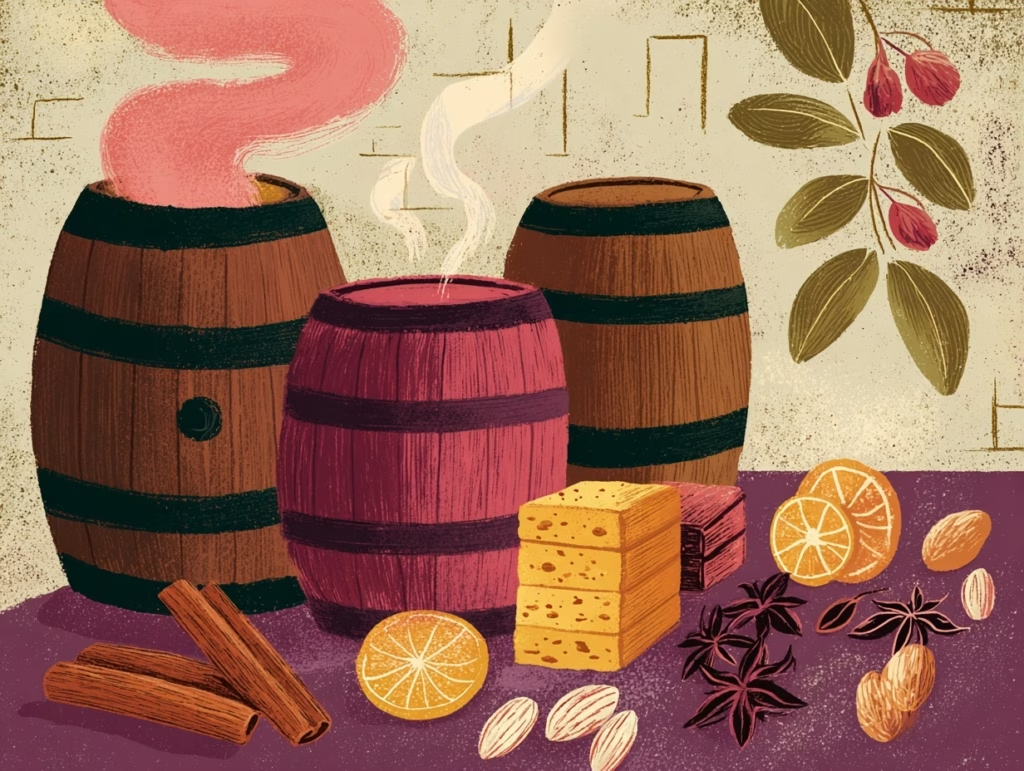
While we’ve walked through the differences between oak and steel aging (and everything in between), the differences don’t stop there. If you’ve ever wondered why some oak-barrel aged wines taste of vanilla and coconut while others whisper notes of baking spice and tobacco, the answer might be hiding in the barrel. The choice between French, Hungarian, and American oak isn’t just a winemaking decision, it’s a flavor philosophy that shapes everything from a Napa Cabernet to a white Burgundy.
The Forest Makes the Difference
French oak comes primarily from five forests: Allier, Limousin, Nevers, Tronçais, and Vosges. These trees grow slowly in tight-grained forests, producing dense wood with subtle tannin structure. American oak, typically from the Midwest (Missouri, Minnesota, Wisconsin), grows faster in less dense forests, resulting in wider grain patterns and more aggressive flavor compounds. Hungarian oak, sourced from the Zemplén Mountains and other forests in Eastern Europe, falls somewhere between the two—tighter grain than American but more rustic character than French.
This difference in grain tightness affects oxygen transmission. French oak’s tighter grain allows for slower, more controlled oxidation—think of it as the wine breathing through a silk scarf rather than a cotton t-shirt. American oak’s wider grain is more like breathing through linen. Hungarian oak sits in the middle, offering moderate oxidation that can add complexity without overwhelming delicate wines.
The Cooperage Question
Here’s where it gets interesting: French barrels must be split along the grain, a labor-intensive process that respects the wood’s natural structure. American oak can be sawn, which is faster and cheaper but can disrupt those cellular structures. This ties back to the wood’s inherent properties. Sawn American oak would leak; split French oak would waste too much wood. Hungarian oak, like French, is typically split rather than sawn.
The toasting process differs too. French barrels typically receive a longer, gentler toast over smaller fires, while American oak often gets a more intense, shorter toast. Hungarian oak cooperages often use medium toasts that highlight the wood’s natural spice characteristics. These choices amplify each oak’s natural tendencies rather than fighting against them.
Flavor Profiles: The Real Talk
American oak is the extrovert: bold vanilla, sweet coconut, pronounced dill. It’s why many California Chardonnays practically announce themselves across a room. The lactones (flavor compounds) in American oak are significantly higher, giving you that unmistakable sweet vanilla note.
French oak plays it cooler: subtle baking spice, cedar, coffee, tobacco. It’s less about adding flavor and more about adding structure and complexity. The tannins are finer, the integration more seamless. A Burgundy aged in French oak might take you a moment to identify as oaked at all.
Hungarian oak offers an intriguing middle ground: spice-forward with notes of cedar and cinnamon, but without American oak’s aggressive sweetness. It adds complexity and a rustic edge that works particularly well with bold reds like Zinfandel and Syrah.
Price and Prestige
Let’s address the elephant in the cellar: French oak barrels cost $800-$4,000 each, while American oak runs $300-$800, and Hungarian oak typically falls in the $600-$1,200 range. French oak requires more labor, from forest to cooperage. The wood must be air-dried for 2-3 years (American oak can be kiln-dried in weeks). The splitting process is slow. The shipping across an ocean adds up.
But expensive doesn’t always mean better. Some wines genuinely shine in American oak. A bold Zinfandel or a rich Rioja can handle—and benefit from—American oak’s assertive character, while delicate Pinot Noir or elegant Chardonnay might be overwhelmed. Hungarian oak has found favor with winemakers seeking something different—a way to add structure and spice without the vanilla bomb of American oak or the price tag of premium French oak.
Reading the Label (and Between the Lines)
Winemakers often use combinations. A Napa Cab might see 70% French oak and 30% American, capturing complexity from the French while adding that New World generosity from the American. High-end Spanish producers often blend French oak (for structure) with American (for tradition—Spain has used American oak for centuries).
💡 Pro Tip: Because Spain’s approach is relatively unique among European countries, if you’re in a blind tasting and get notes typical of Old World wines (earth, tobacco, leather), but with dill or coconut (classic American oak markers) usually found in New World wines, that’s a solid clue you may be drinking a Spanish wine. This clarifies the Old World hallmarks (earthy, savory, structural) versus the American oak giveaways (sweet, obvious wood influence) that make Spanish wines such an interesting hybrid profile in blind tastings.
When a label says “French oak aged,” it’s usually a point of pride and a hint about style: expect subtlety and integration. “American oak” on a label often signals a bolder, fruit-forward approach. Hungarian oak mentions are rarer but signal a winemaker experimenting with spice-driven complexity. No label mention? Could be neutral oak (old barrels that impart minimal flavor), stainless steel, or a blend the winemaker doesn’t want to specify.
The Practical Pour
Want to taste the difference yourself? Here’s the perfect experiment: same producer, same vineyards, same grape—just different oak. And yes, this is the same Marqués de Riscal with that stunning Frank Gehry-designed hotel wrapped in titanium ribbons—if you’ve stayed there, you know it’s worth the price tag—this winery takes all kinds of craft seriously.
- Marqués de Riscal Rioja Reserva represents traditional Rioja at its finest. Aged approximately two years in American oak barrels, you’ll get those signature notes of vanilla, tobacco, and sweet spice. This is what American oak does best: warm, generous, immediately welcoming.
- Marqués de Riscal Rioja Gran Reserva shows what happens when the same winery shifts to French oak. Aged 2.5-3 years in French oak casks, the Gran Reserva delivers more complexity—balsamic notes, refined tannins, subtle toast. It’s more restrained, more architectural, more about structure than decoration.
Set them side by side and the oak difference becomes obvious. The Reserva will show you American oak’s bold personality, that unmistakable sweetness and spice. The Gran Reserva demonstrates French oak’s elegance, how it adds layers without announcing itself. Same fruit, same hands, different barrels. It’s the closest thing to a controlled experiment you can do outside a winery lab.
The Bottom Line
French oak costs more but integrates seamlessly. American oak delivers bold, recognizable flavors at a lower price point. Hungarian oak offers complexity and character for winemakers seeking something between the two extremes. All three have a place in great winemaking. The question isn’t which is better—it’s which is better for the wine in question and the story the winemaker wants to tell.
And ultimately, that’s what you’re tasting: not just wood and wine, but intention and craft, translated into the glass in front of you.