Loire Valley Wines: Complete Guide to France’s Most Elegant Wine Region
Spanning from the central heartland of France to the Atlantic, the Loire Valley isn’t just one region—it’s many. Along its winding river, the climate, soils, and grapes shift dramatically, giving rise to everything from nervy Sauvignon Blanc to golden Chenin to the most oyster-ready wine in France.
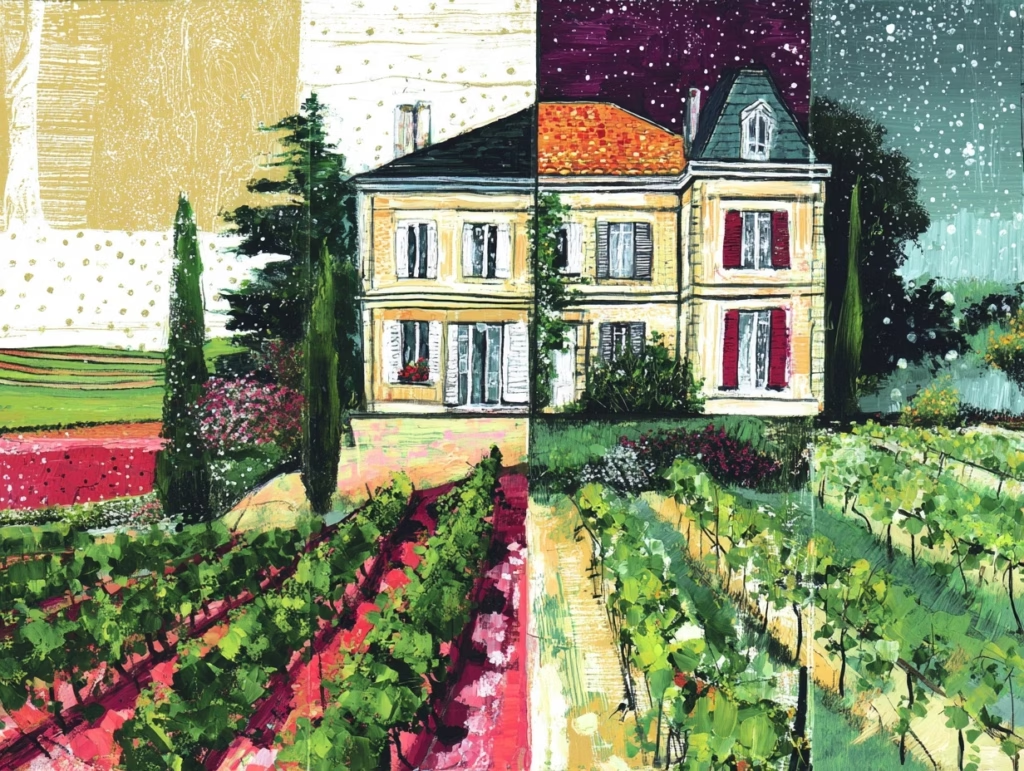
France’s Loire Valley unfolds like an impressionist garden—lush, luminous, and elegant, with beauty that deepens the longer you look. Spanning over 600 miles from central France to the Atlantic coast, the Loire Valley wine region produces some of the world’s most food-friendly and terroir-driven wines. Its wines are delicate but vivid, composed not with bold brushstrokes but with many small ones that come together into something more beautiful.
Unlike the power of Bordeaux or the silk of Burgundy, Loire Valley wines are light, layered, and living—a region where freshness matters, texture speaks, and terroir takes center stage. From nervy Sauvignon Blanc to golden Chenin Blanc to France’s most oyster-friendly wines, the Loire Valley offers incredible diversity across its four main wine regions.
What Makes Loire Valley Wines Special?
The Loire Valley isn’t just one wine region—it’s four distinct areas along the winding Loire River, where climate, soils, and grape varieties shift dramatically. No matter the grape or appellation, Loire Valley wines carry a quiet clarity that speaks in subtleties. Like a Monet painting, their full beauty reveals itself only when you take a step back and truly look.
The region’s cool climate and diverse soils create ideal conditions for:
- High-acid white wines perfect for food pairing
- Elegant red wines with finesse over power
- World-class sparkling wines made in the traditional method
- Noble rot dessert wines among France’s finest
Let’s explore the Loire Valley wine regions from east to west.
Upper Loire Valley Wine Region: Sancerre and Pouilly-Fumé
Climate and Terroir
The Loire Valley’s easternmost vineyards lie in the Upper Loire, bordering Burgundy and defined by a cool continental climate. Summers are short and sunny, winters are cold, and the dramatic diurnal temperature range means grapes ripen slowly while retaining high acidity. Soils of limestone, clay, and flint (silex) create the mineral backbone that defines these wines.
Key Loire Valley Grape Varieties
- Sauvignon Blanc: Achieves its most refined expression here
- Pinot Noir: Produces elegant, often overlooked red wines
Top Upper Loire Appellations
- Sancerre: The most famous Loire Valley Sauvignon Blanc, ranging from linear and citrusy to smoky and mineral
- Pouilly-Fumé: Known for flinty, mineral-driven Sauvignon Blanc
- Menetou-Salon: Excellent value alternative to Sancerre
- Reuilly: Produces both white and rosé wines
Touraine Wine Region: Heart of the Loire Valley
The Loire Valley’s Centerpiece
Moving west into Touraine, the Loire begins to widen and the climate shifts to a slightly warmer temperate continental zone. This is the valley’s beating heart, where limestone-rich soils create ideal conditions for both Chenin Blanc and Cabernet Franc.
Touraine Grape Varieties
- Chenin Blanc: The Loire Valley’s most versatile grape
- Cabernet Franc: The region’s premier red grape variety
- Sauvignon Blanc: Often compared to Sancerre but more affordable
Must-Know Touraine Appellations
- Bourgueil and Saint-Nicolas-de-Bourgueil: Structured, peppery Cabernet Franc
- Vouvray: Home to the Loire Valley’s finest Chenin Blanc in dry, off-dry, sweet, and sparkling styles
- Montlouis-sur-Loire: Produces exceptional Chenin Blanc across all sweetness levels
- Chinon: Famous for elegant Cabernet Franc red wines
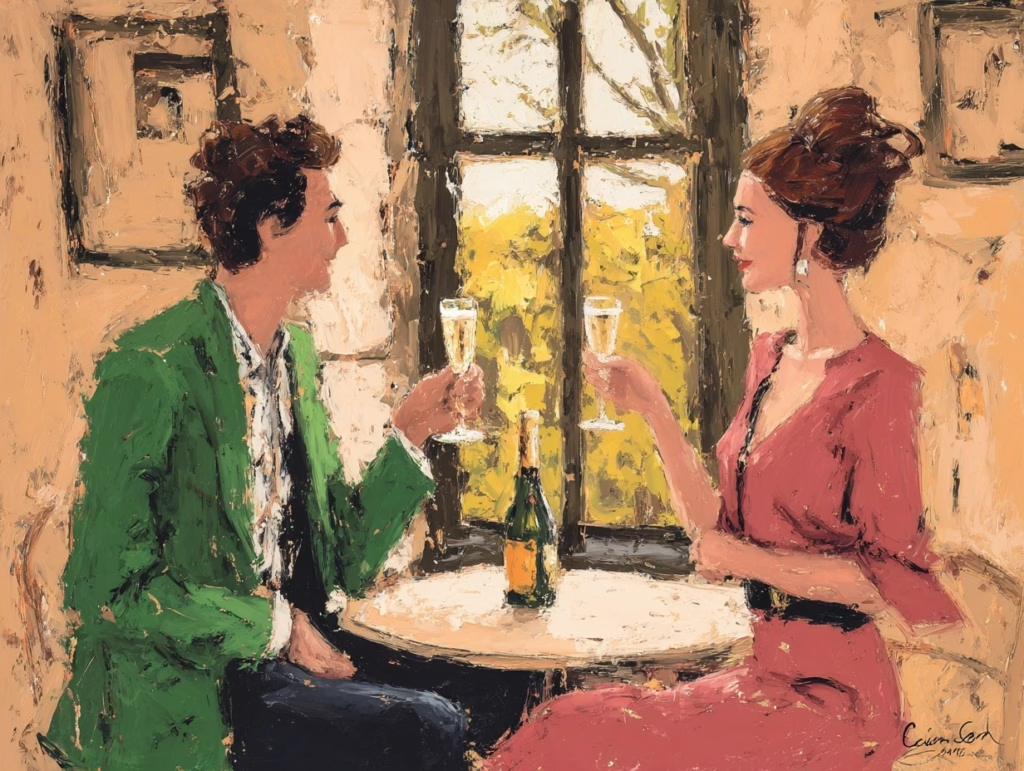
Saumur Wine Region: Sparkling Wine Capital
Loire Valley Sparkling Wine Excellence
Southwest of Touraine lies Saumur, built on a foundation of tuffeau limestone—the same porous rock that forms the region’s ancient wine cellars. This temperate continental climate and unique geology produce lifted, floral, and elegant wines.
Saumur Specialties
- Crémant de Loire: Premium sparkling wine made in the traditional method
- Saumur Brut: Often mistaken for Champagne in blind tastings
- Saumur-Champigny: Bright, red-fruited Cabernet Franc
Primary Grape Varieties
- Chenin Blanc: More floral and mineral than neighboring regions
- Cabernet Franc: Precise and elegant expression
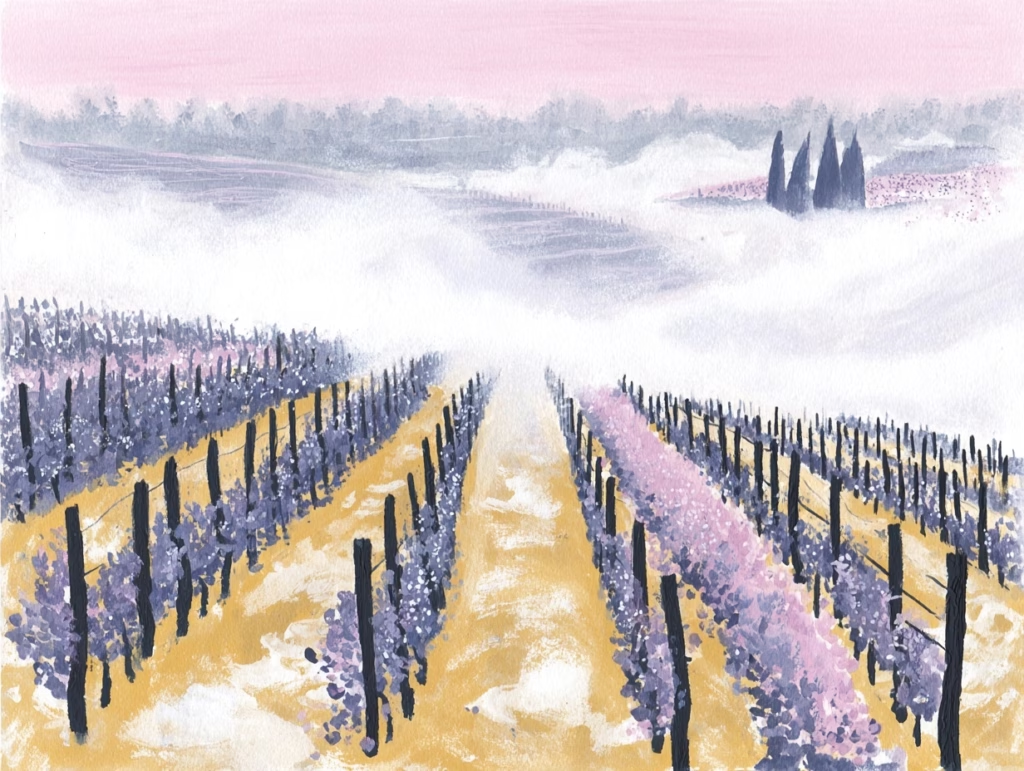
Anjou Wine Region: Sweet Wines and Noble Rot
Climate and Sweet Wine Production
As the Loire turns westward into Anjou, the climate grows warmer and more humid with increasing maritime influence. Morning mists and riverside fogs encourage botrytis cinerea (noble rot), creating conditions for some of France’s most exceptional dessert wines.
Anjou’s Famous Sweet Wines
The Coteaux du Layon, Bonnezeaux, and Quarts de Chaume appellations produce age-worthy, botrytized Chenin Blanc—golden and honeyed but never cloying, thanks to Chenin Blanc‘s signature acidity.
Dry Wine Excellence
Savennières, perched on schist and slate soils, produces some of the world’s most profound dry Chenin Blanc expressions.
Anjou Grape Varieties
- Chenin Blanc: From bone-dry to lusciously sweet
- Cabernet Franc: Fruitier and rounder than eastern Loire expressions
- Grolleau: Traditional rosé grape
- Gamay: Light, fruity reds
Pays Nantais: Home of Muscadet
Maritime Climate Influence
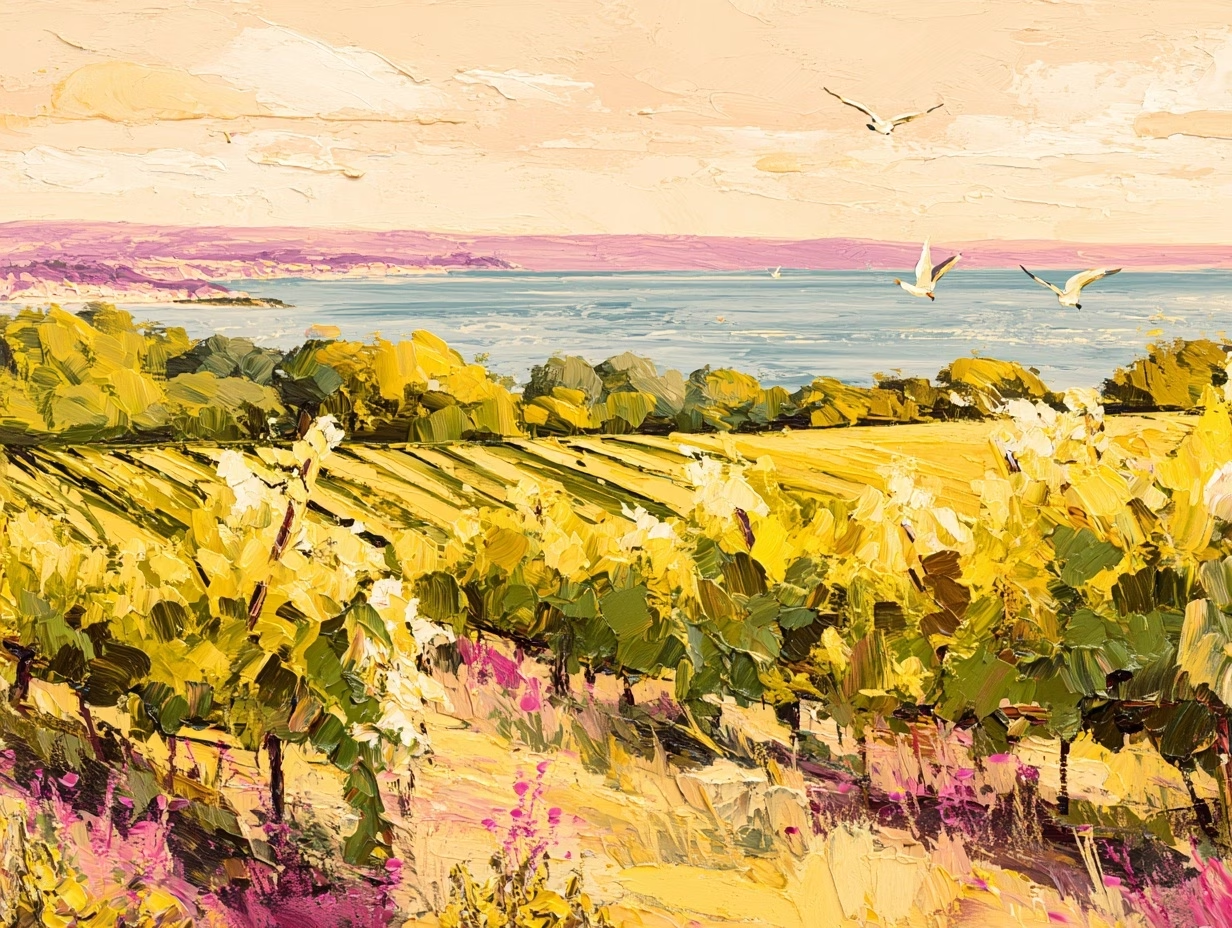
At the Loire River’s mouth, Pays Nantais meets the Atlantic Ocean. The decidedly maritime climate—cool, wet, and moderated by ocean breezes—creates perfect conditions for one of France’s most food-friendly white wines.
Muscadet: The Ultimate Seafood Wine
Melon de Bourgogne (the grape behind Muscadet) produces light, crisp wines often aged sur lie (on the lees) for added texture. These wines’ saline edge, born from proximity to the sea, gives them purity and freshness that has earned quiet reverence among sommeliers worldwide.
Key Muscadet Appellations
- Muscadet Coteaux de la Loire: Lighter, more mineral style
- Muscadet Sèvre-et-Maine: The most prestigious Muscadet appellation
Loire Valley Wine and Food Pairing
Loire Valley wines’ high acidity and elegant structure make them exceptional food wines:
- Sancerre and Pouilly-Fumé: Perfect with goat cheese, shellfish, and herb-driven dishes
- Vouvray: Versatile across the sweetness spectrum—dry versions with fish, sweet with foie gras or fruit desserts
- Chinon and Bourgueil: Excellent with roasted poultry, pork, and mushroom dishes
- Muscadet: The classic oyster wine, also perfect with other seafood
When to Visit Loire Valley Wine Country
The best time to visit Loire Valley wineries is during harvest season (September-October) or late spring (May-June) when the vineyards are lush and green. Many châteaux offer tastings and tours, and the region’s proximity to Paris makes it an easy weekend wine trip.
Final Thoughts on Loire Valley Wines
The Loire Valley wine region is best understood not by category, but by continuum—a flowing canvas of climate, grape varieties, and winemaking styles. From east to west, from lean to lush, from crisp Sauvignon Blanc to honeyed Chenin Blanc, Loire Valley wines trace the river’s journey like brushstrokes trace light across a landscape.
Every bottle holds a different expression of the Loire: a whisper of limestone, a breath of river mist, a flicker of orchard bloom. Like the finest works of Impressionism, these wines reward the quiet observer, revealing their brilliance not in bold outlines, but in subtle strokes that come into focus with time.
Whether you’re seeking an introduction to French wine or looking to explore beyond Bordeaux and Burgundy, the Loire Valley offers wines of remarkable diversity, food-friendliness, and value. Step back, linger, and let the picture emerge.