Pinot Noir: The Complete Guide to Wine’s Most Seductive (and Complicated) Red
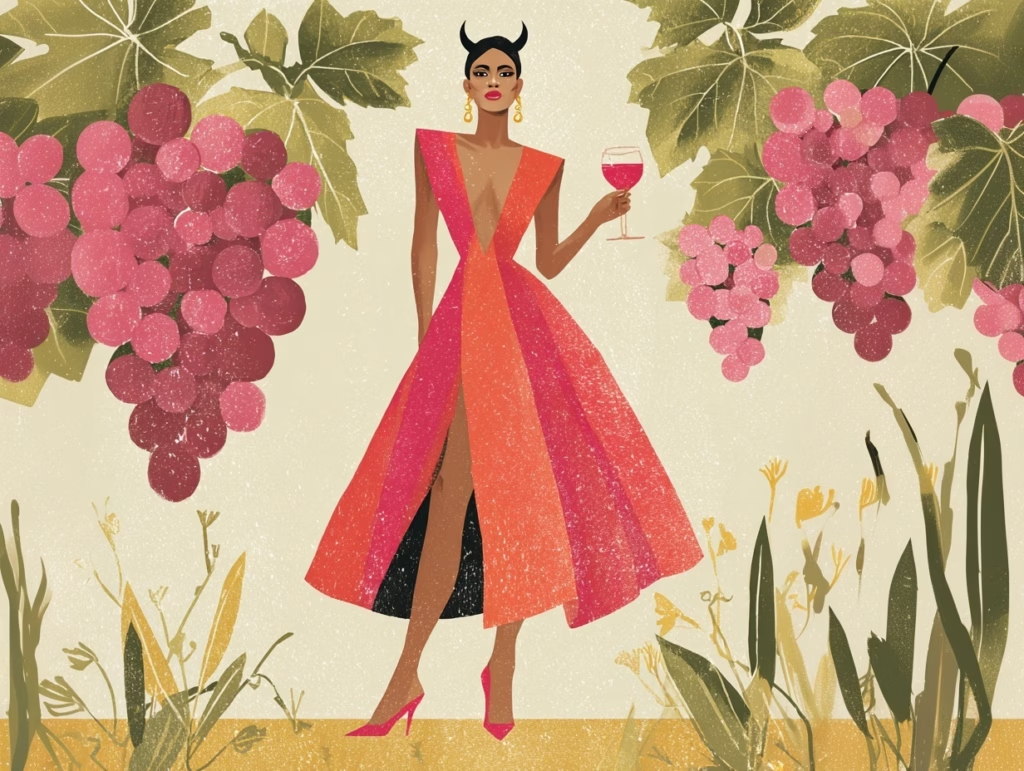
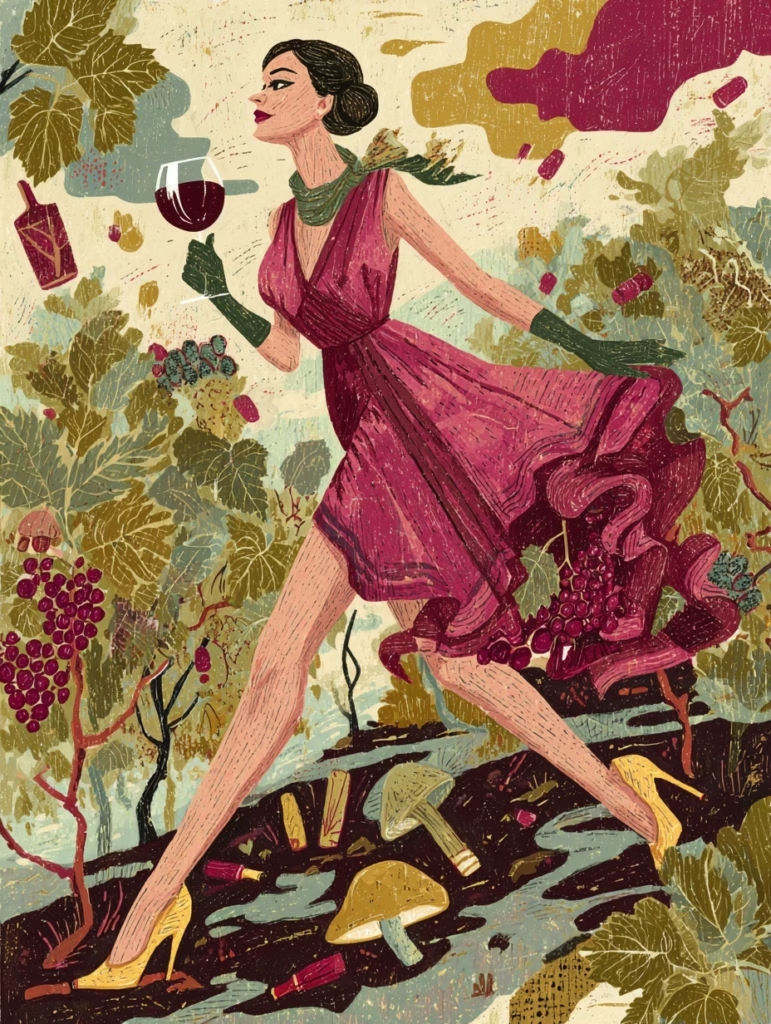
If wine grapes were characters in a drama, Pinot Noir would be that girl. You know the one—gorgeous, captivating, impossible to ignore, but also high-maintenance, unpredictable, and absolutely exhausting to deal with. She’s the grape that winemakers both obsess over and complain about, the one that makes them question their life choices at 3 AM during harvest.
And yet? We can’t get enough of her.
Pinot Noir is the devil in a red dress—seductive in the glass, maddeningly difficult in the vineyard. She’s proof that sometimes the most beautiful things are also the most complicated. And honestly? That’s exactly what makes her so damn irresistible.
What is Pinot Noir? Understanding This Legendary Grape
Pinot Noir is a thin-skinned red wine grape that produces some of the world’s most elegant and food-friendly wines. Originally from Burgundy, France, this ancient variety has been cultivated for over 2,000 years and is now grown in cool-climate wine regions worldwide—from Oregon’s Willamette Valley to California’s Sonoma Coast, New Zealand, and beyond.
What makes Pinot Noir special? Unlike bolder reds like Cabernet Sauvignon or Syrah, Pinot Noir wines are typically lighter in body with delicate fruit flavors, silky tannins, and bright acidity. But don’t confuse “light” with “simple”—these wines offer incredible complexity and aging potential when done right.
Why Pinot Noir is the Ultimate High-Maintenance Grape
Let’s talk about why winemakers have a love-hate relationship with Pinot Noir. Legendary California winemaker André Tchelistcheff famously said, “God made Cabernet Sauvignon. The Devil made Pinot Noir.” And he wasn’t exaggerating.
What Makes Pinot Noir So Difficult to Grow:
- Thin-skinned and fragile – Those delicate skins make Pinot vulnerable to disease, rot, and pests. It’s the grape equivalent of that friend who needs eight layers in 60-degree weather.
- Climate diva – Pinot Noir requires cool climates with just the right amount of sunshine. Too hot? The wine tastes jammy and loses its signature elegance. Too cold? The grapes won’t ripen properly. She needs conditions that are Goldilocks-level perfect.
- Terroir obsessed – Pinot Noir grapes are particularly expressive of where they’re grown, which sounds romantic until you realize that means every tiny vineyard detail matters. Different soil five feet away? That’s a different wine, baby.
- Low yields required – To produce quality Pinot Noir, you have to drastically limit how much fruit each vine produces. It’s expensive, labor-intensive, and all the more heartbreaking when mother nature doesn’t cooperate.
- Mutation prone – Pinot Noir has been around for centuries, mutating into different clones and variations. This genetic instability makes consistency nearly impossible.
Basically, growing great Pinot Noir is like dating someone impossibly seductive who constantly keeps you guessing. Exhausting? Absolutely. Worth it? Ask any Burgundy winemaker who’s been doing this for generations.
Why Wine Drinkers Are Obsessed (Spoiler: She’s Worth It)
While Pinot Noir drives winemakers to therapy, wine drinkers absolutely adore her. Count me among them. Pinot has been my ride-or-die for years, and there’s a reason she’s never left my regular rotation.
What Makes Pinot Noir So Popular:
- Incredible food pairing versatility: Pinot Noir pairs beautifully with everything from salmon to duck to mushroom risotto to Thanksgiving turkey. Need a red wine that won’t overpower delicate dishes? Pinot’s your girl.
- Delicious on its own: Unlike some reds that taste harsh without food, Pinot Noir is equally happy flying solo. Perfect for casual sipping without the pressure of finding the “perfect pairing.”
- Elegant but complex: Pinot delivers layers of flavor without being overly bold or aggressive. It’s sophisticated enough for wine nerds but approachable enough for casual drinkers.
- Lower alcohol content: Most Pinot Noir wines clock in around 12-14% ABV, compared to Cabernet’s 14-15%. You can have a second glass without feeling like you need a nap.
- Gorgeous aromatics:That nose! Pinot offers some of the most beautiful, expressive aromas in the wine world—cherry, rose petal, forest floor, warm spices.
The devil wears red beautifully. And she knows it.
What Does Pinot Noir Taste Like? Flavor Profile & Tasting Notes
Pinot Noir’s flavor profile is distinctive and immediately recognizable once you know what to look for. Here’s what you can expect:
Primary Fruit Flavors:
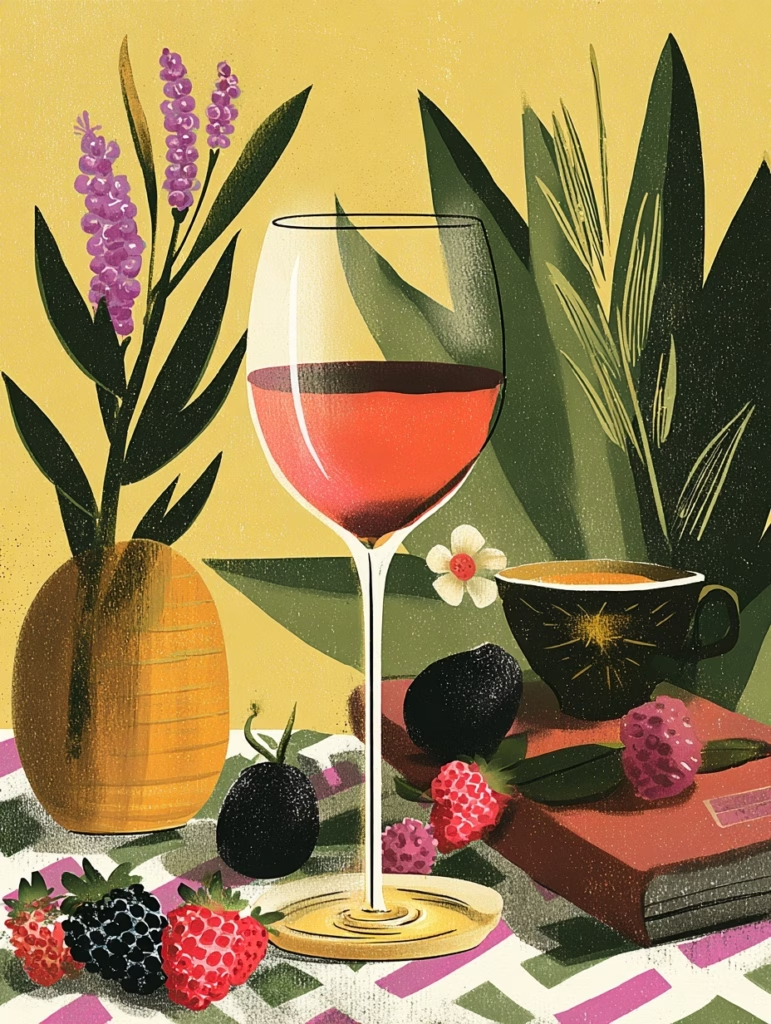
- Red fruits dominate: cherry (especially tart cherry), cranberry, raspberry, strawberry
- Sometimes darker fruits like black cherry or plum in warmer climates
- Generally more red fruit than black fruit
Secondary & Tertiary Notes:
- Floral: Rose petal, violet, sometimes lavender
- Earthy: Forest floor, mushroom, damp leaves, truffle
- Spice: Cinnamon, clove, sometimes subtle smokiness
- Other: Tea, leather, tobacco (especially with age)
Mouthfeel & Structure:
- Silky, elegant texture rather than a big, tannic grip
- Medium body (lighter than Cabernet, fuller than most rosés)
- Bright, mouthwatering acidity
- Fine-grained, subtle tannins—more velvet glove than iron fist
The best Pinot Noir wines strike a perfect balance between delicate fruit, earthy complexity, and refreshing acidity. It’s this combination that makes them so food-friendly and endlessly drinkable.
How to Identify Pinot Noir: Your Wine Detective Guide
Not sure if you’re drinking Pinot Noir? Here are the telltale signs to look for:
- Color: Pinot Noir color is distinctively pale for a red wine. Hold your glass up to the light and look for translucent ruby or garnet tones—you should be able to see through it. If your wine is opaque and inky dark? Probably not Pinot.
- Aromas: Take a deep sniff and look for layers of red fruit (cherry and cranberry), floral notes (rose petal, violet), and earthy undertones (forest floor, mushroom). If you’re getting blackberry jam and chocolate? Probably not Pinot.
- Texture: Pinot Noir has a silky, smooth texture with bright acidity that makes your mouth water. The tannins are present but fine-grained and subtle. If the wine feels heavy and grippy, it’s likely a different variety.
- Finish: Pinot typically has a long, aromatic finish that lingers with those signature red fruit and earth notes. If it just disappears immediately, it might not be Pinot.
Burgundy vs Oregon vs California Pinot Noir: Regional Comparison
This is where things get really interesting. Because Pinot Noir is so expressive of terroir, the same grape tastes wildly depending on where it’s grown.
Burgundy Pinot Noir: The French Original
Burgundy, France is where Pinot Noir was born, and Burgundian Pinots set the gold standard. These wines are complex, earthy, and profoundly expressive of their specific vineyard site. Burgundian pinots are sophisticated, intellectual, the wine equivalent of a perfectly tailored French trench coat. It’s about finesse and complexity rather than fruit-forward power. These wines often need time to open up and reward patience.
Burgundy Pinot Noir Characteristics:
- Flavor profile: Red cherry, earth, mushroom, leather, sometimes subtle barnyard notes
- Body: Medium, elegant, restrained power
- Structure: High acidity, fine tannins, built for aging
- Climate influence: Cool continental climate creates tension between fruit and earth
- Price range: $25-40 for village-level Bourgogne Rouge, $200+ for Grand Cru
Willamette Valley Oregon Pinot Noir: The American Burgundy
Oregon Pinot Noir, particularly from the Willamette Valley, has become America’s answer to Burgundy. The cool Pacific Northwest climate creates wines with bright acidity, restraint, and gorgeous purity of fruit. Think fresh-faced and approachable but still sophisticated. Oregon Pinot Noir is more about purity and elegance than power—it’s the cool girl aesthetic of the wine world.
Oregon Pinot Noir Characteristics:
- Flavor profile: Bright cherry, cranberry, rose petal, forest floor, sometimes cola and red tea
- Body: Light to medium, graceful and delicate
- Structure: Vibrant acidity, soft tannins, very food-friendly
- Climate influence: Cool, misty climate similar to Burgundy creates elegance
- Price range: Entry-level $25-35, single-vineyard $45-75, special releases $75+
Sonoma Coast California Pinot Noir: New World Elegance
California Pinot Noir from the Sonoma Coast—particularly areas like Fort Ross-Seaview and the true coastal ridges—bridges Old World elegance with New World fruit expression. The proximity to the Pacific Ocean keeps things cool, while California sunshine adds richness. She’s polished and confident with California sunshine in her veins. Sonoma Coast Pinot Noir is sexy and approachable while maintaining elegance—think Golden Hour glow rather than harsh spotlight.
Sonoma Coast Pinot Noir Characteristics:
- Flavor profile: Ripe cherry, dark berries, coastal herbs, cola, smoke, sometimes saline minerality
- Body: Medium to medium-full, richer texture than Oregon
- Structure: Good acidity, slightly riper tannins, coastal influence
- Climate influence: Cool ocean fog meets California sun for balance
- Price range: Entry-level $35-50, single-vineyard $60-90, cult producers $100+
Pinot Noir Regional Comparison Chart
| Region | Flavor Profile | Body & Structure | Typical Price | Best For |
| Burgundy, France | Earth, mushroom, red cherry, leather | Medium, high acid, elegant | $25-$200+ | Aging, special occasions |
| Willamette Valley, Oregon | Bright cherry, cranberry, rose, forest floor | Light-medium, lifted, soft tannins | $25-$75 | Food pairing, everyday elegance |
| Sonoma County, California | Ripe cherry, herbs, cola, smoke | Medium-full, balanced, coastal minerality | $35-$100+ | California warmth with restraint |
How to Choose the Best Pinot Noir for You
Not all Pinot Noir wines are created equal. Here’s how to find your perfect bottle:
- If you’re new to Pinot Noir: Start with Oregon or entry-level California. They’re fruit-forward and approachable while still showing the grape’s characteristic elegance. Look for bottles in the $25-40 range.
- If you want food-pairing versatility: Oregon Pinot Noir is your best bet. The bright acidity and lighter body make it incredibly food-friendly without being boring.
- If you love earthy, complex wines: Go for Burgundy or seek out aged Pinot Noir. The earthy, mushroomy notes become more pronounced with age.
- If you prefer fruit-forward wines: California Pinot Noir from warmer areas (Russian River Valley, Santa Lucia Highlands) will give you riper fruit while maintaining elegance.
- For special occasions: Invest in single-vineyard Pinot Noir from top producers. These wines showcase specific terroir and are worth the splurge.
Pinot Noir Recommendations: Bottles Worth Trying
- Flowers Sonoma Coast Pinot Noir ($50) – California, Sonoma Coast: This coastal beauty shows exactly what Sonoma Coast does best. From vineyards less than two miles from the Pacific, it opens with coastal evergreens, wildflowers, tart cherry, and warm spices. There’s gorgeous flinty minerality, notes of orange peel, and that lifted, savory finish that makes Flowers so distinctive. Medium-bodied with bright acidity and fine-grained tannins—complex enough to impress, approachable enough for Tuesday dinner.
- Patricia Green Reserve Pinot Noir ($28) – Oregon, Willamette Valley: If you want to understand Oregon Pinot, start here. This Willamette Valley legend delivers pure, classic expression: brilliant ruby with spice-tinged raspberry, cherry, cola, and smoky minerality. The palate is sweet and focused with energetic red berries, rose, and blood orange, finishing with that mouthwatering snap of crunchy fruit. Graceful, expressive, and totally captivating.
- Rhys Horseshoe Vineyard Pinot Noir ($135) – California, Santa Cruz Mountains: An investment piece for serious Pinot lovers. Kevin Harvey’s obsessive terroir-driven approach has made Rhys a cult favorite (96 points Jeb Dunnuck, 95 Vinous). Expect layers of black cherry, wild berries, forest floor, and complex spice with distinctive Santa Cruz minerality. This is California Pinot built for aging, channeling Burgundian elegance while remaining distinctly New World. Save it for something special.
The Bottom Line: Embrace the Devil
Yes, Pinot Noir is high-maintenance. Yes, she’s unpredictable. Yes, winemakers complain about her. But there’s a reason this grape has captivated wine lovers for centuries.
Pinot Noir is proof that sometimes the most beautiful things require the most effort. She rewards patience, expresses her origins with breathtaking clarity, and makes you slow down and pay attention.
Whether you’re comparing Burgundy vs Oregon Pinot Noir, exploring California coastal expressions, or just looking for a red wine that pairs with basically everything, Pinot delivers. She works equally well with a Tuesday night salmon dinner or a special celebration. She’s just as happy alongside rich duck confit as she is with a simple mushroom pasta.
Is she the devil? Maybe. But she’s the devil in the most beautiful red dress you’ve ever seen, and she knows exactly how to work a room.
So next time you’re at the wine shop, pick up a bottle. Try one from Oregon, then one from Burgundy, then one from Sonoma. Taste how the same grape transforms across regions. Fall in love with her complexity. Appreciate her elegance. And maybe understand why winemakers keep coming back to her, despite all the headaches.
Because some temptations are absolutely worth it.