Some Heroes Sport Port: Your Holiday Essential Guide to Portugal’s Sweetest Export

It’s the holidays, which means you’re about to attend at least three parties where someone brings a cheese board that could feed a small army. And while everyone’s reaching for the same old Cab Sauv (no hate), you? You’re about to become the hero who shows up with Port—the ultimate dessert wine that pairs with everything on that cheese board and saves the day.
Port is Portugal’s gift to the wine world: rich, sweet, complex, and surprisingly versatile. Whether you’re wrapping presents, hosting a holiday party, or just trying to survive family dinner, Port has your back. Let’s dive into why this fortified wine from Portugal’s Douro Valley deserves a permanent spot in your holiday roster (and year round for that matter).
What Exactly Is Port Wine?
Port (or Porto, if you want to sound fancy) is a fortified wine from the Douro Valley in northern Portugal. “Fortified” means winemakers add grape spirit (basically brandy) during fermentation, which stops the fermentation process early, leaving residual sugar and boosting the alcohol content to around 19-20%. The result? A sweet, rich, powerful wine that can age for decades and tastes like liquid luxury.
Think of Port as wine’s version of a cashmere sweater—rich, indulgent, and worth the investment.
Port Wine Quick Facts:
- Origin: Douro Valley, Portugal (shipped from Porto)
- Alcohol content: 19-20% (compared to 12-15% for table wines)
- Production method: Fortified with grape spirit during fermentation
- Flavor profile: Sweet, fruity, rich, with notes ranging from red berries to chocolate to dried fruit
- Aging potential: From immediately drinkable to 50+ years
Why Did Porto Become the Dessert Wine Capital?
Here’s the origin story: Back in the 17th century, British wine merchants were obsessed with French wines (specifically Bordeaux). But when England and France got into one of their many historical spats, the Brits needed a new wine supplier. Enter Portugal, England’s longtime ally.
The problem? Portuguese table wines didn’t survive the long, hot journey from Portugal to England. They’d arrive oxidized and basically undrinkable
The solution: winemakers started adding grape spirit to fortify the wine, which preserved it during transport. But they discovered something even better—when they added the spirit during fermentation (rather than after), they created something new: a sweet, stable, delicious wine that actually improved during the voyage.
The British went wild for it. Port became the must-have wine for English aristocracy, and the Douro Valley pivoted hard into dessert wine production. The relationship was so strong that many of the historic Port houses still have British names (Taylor’s, Graham’s, Cockburn’s) even though they’re Portuguese companies.
💡 Fun Fact: The Douro Valley became the world’s first officially demarcated wine region in 1756—before Bordeaux, before Champagne. The Portuguese government literally drew borders around where “real” Port could be made, protecting quality standards centuries before AOC systems became standard practice.
The Douro Valley: Where Port Comes to Life
Porto earns its UNESCO World Heritage site label with dramatic terraced vineyards carved into steep hillsides along the Douro River, creating one of the most stunning wine landscapes in the world.
Douro Valley Geography:
- Location: Northern Portugal, about 60 miles east of Porto
- Climate: Hot, dry summers (like, legitimately scorching) and cold winters
- Terrain: Steep schist hillsides requiring terraced vineyards
- Elevation: Ranges from 150 to 600 meters above sea level
The extreme conditions—intense heat, poor rocky soil, steep slopes—make the Douro Valley terrible for most agriculture but perfect for growing grapes with concentrated flavors.
The region is divided into three sub-regions:
- Baixo Corgo: Coolest and wettest, produces lighter styles
- Cima Corgo: The sweet spot (literally), where most premium Port comes from
- Douro Superior: Hottest and driest, intense wines with aging potential
How Port Is Made: The Production Process
Understanding how Port is made helps you appreciate what you’re drinking (and sound smart at holiday parties).
Step 1: The Grapes Port uses a blend of indigenous Portuguese grapes—up to 80+ varieties are permitted, though five are considered the best:
- Touriga Nacional: The star player, bringing structure and dark fruit
- Touriga Franca: Adds elegance and floral aromatics
- Tinta Roriz (Tempranillo): Contributes spice and complexity
- Tinta Barroca: Brings richness and body
- Tinto Cão: Rare but prized for finesse and aging potential
Step 2: Fermentation… Interrupted
Here’s where the magic happens. Grapes are crushed (traditionally by foot stomping in granite lagares—yes, really, it’s still done at premium houses), and fermentation begins like any wine. But after just 2-3 days, when about half the sugar has converted to alcohol, winemakers add grape spirit. This kills the yeast, stops fermentation, and preserves the remaining sugar.
Step 3: Aging Different Port styles age in different ways:
- Ruby Port: Aged in large vats to preserve fresh fruit character
- Tawny Port: Aged in smaller oak barrels for oxidative aging
- Vintage Port: Aged in bottle for complex development
The aging vessel completely transforms the final wine—just like we learned with oak vs. stainless steel, the container shapes the personality.
Port Styles Explained: Your Complete Breakdown
Port isn’t just one thing—it’s an entire universe of styles. Here’s your guide to navigating the category like a pro:
Ruby Port
- What it is: The most basic Port style, aged in large vats to preserve fresh, fruity character. Young, vibrant, and affordable.
- Flavor profile: Bright red fruit (cherry, raspberry), chocolate, spice. Sweet but not cloying.
- When to drink: Now! These don’t improve with age.
- Price range: $15-25
- Perfect for: Casual sipping, chocolate desserts, your first Port experience
Reserve/Premium Ruby
- What it is: Higher-quality Ruby aged 4-6 years, more complex than basic Ruby
- Flavor profile: Deeper fruit, more integration, hints of spice and cocoa
- Price range: $20-35
- Perfect for: Stepping up from basic Ruby without committing to Vintage
Tawny Port
- What it is: Port aged in smaller oak barrels, allowing oxidation that creates nutty, caramel flavors. Look for age designations: 10, 20, 30, or 40 years.
- Flavor profile: Dried fruit, caramel, toffee, nuts (especially walnut), orange peel, baking spices
- Color: Lighter, amber-tawny hue (hence the name)
- When to drink: Now—the age on the label is average age of wines in the blend, already perfectly matured
- Price range: 10-year: $25-35 | 20-year: $45-65 | 30-year: $80-120
- Perfect for: Holiday desserts, nut-based desserts, sipping by the fireplace
💡 Pro Tip: The age statement is average, not actual—a 20-year Tawny contains wines averaging 20 years old, not all exactly 20 years.
Late Bottled Vintage (LBV)
- What it is: Port from a single vintage, aged 4-6 years in barrel before bottling. It’s like Vintage Port’s more approachable younger sibling.
- Flavor profile: Richer than Ruby, fresher than Tawny—the perfect middle ground with concentrated dark fruit and chocolate
- When to drink: Most are filtered and ready now; some “traditional” LBVs can age
- Price range: $25-45
- Perfect for: When you want single-vintage quality without Vintage Port prices
Vintage Port
- What it is: Port from exceptional single vintages, aged briefly in barrel then bottled young to age in bottle for decades. Only declared in the best years (roughly 3 times per decade).
- Flavor profile: Intense dark fruit, chocolate, spice when young; develops incredible complexity (leather, tobacco, dried fruit, earth) with age
- When to drink: Needs 10-20+ years to hit its stride; can age 50+ years
- Price range: $60-150+ (vintage-dependent)
- Perfect for: Special occasions, cellar-worthy investments, impressing wine snobs
- Important: Vintage Port throws sediment and needs decanting!
White Port
- What it is: Made from white grapes using the same fortification process. Comes in dry and sweet styles.
- Flavor profile: Citrus, nuts, honey, dried apricot
- Serve: Chilled as an aperitif or in cocktails (White Port & Tonic is 👌)
- Price range: $20-30
- Perfect for: Warm weather, pre-dinner drinks, when you want Port vibes without the heaviness
Rosé Port
- What it is: Recent innovation using red grapes with minimal skin contact, creating a pink fortified wine
- Flavor profile: Fresh strawberry, raspberry, subtle sweetness
- Serve: Chilled, maybe with tonic or in cocktails
- Perfect for: Pool parties, brunch, confusing your wine snob friends
Quick Reference: Port Styles Comparison
| Style | Aging | Color | Flavor Profile | Drink Now or Age? | Price Range | Holiday Pairing |
| Ruby | Large vats, 2-3 yrs | Deep ruby | Fresh red fruit, chocolate | Now | $15-25 | Chocolate desserts |
| Reserve Ruby | Large vats, 4-6 yrs | Ruby | Deeper fruit, spice | Now | $20-35 | Brownies, chocolate cake |
| Tawny 10-yr | Small barrels, 10 yrs avg | Amber-tawny | Caramel, nuts, dried fruit | Now | $25-35 | Pecan pie, crème brûlée |
| Tawny 20-yr | Small barrels, 20 yrs avg | Tawny | Complex nuts, toffee, spice | Now | $45-65 | Cheese course, nut tarts |
| Late Bottled Vintage | Barrel, 4-6 yrs | Deep ruby | Concentrated fruit, chocolate | Mostly now | $25-45 | Rich chocolate desserts |
| Vintage | Bottle aging, 10-50+ yrs | Deep purple → brick | Intense fruit → complex aged | Age 10-20+ yrs | $60-150+ | Special celebrations |
| White | Varies | Gold | Citrus, honey, nuts | Now | $20-30 | Aperitif, cheese board |
How to Spot a Port: Your Wine Detective Guide
Not sure if you’re looking at a Port? Here are the telltale signs:
Port on the Label:
- Must say “Porto” or “Port” and “Product of Portugal”
- Should include producer name (Taylor’s, Graham’s, Dow’s, Fonseca, etc.)
- Style designation (Ruby, Tawny, Vintage, LBV, etc.)
- Age statement for Tawnies (10, 20, 30, 40 years)
- Vintage year for Vintage Port and LBV
Port in the Glass:
- Higher alcohol: 19-20% vs. 12-14% for table wine
- Sweetness: Noticeable residual sugar (except some dry White Ports)
- Body: Fuller, richer mouthfeel than regular wine
- Color clues: Deep ruby (Ruby/Vintage) or tawny-amber (Tawny)
Port on the Palate:
- Sweet but balanced (shouldn’t taste like syrup)
- Higher alcohol warmth
- Concentrated flavors (fruit, chocolate, nuts depending on style)
- Long, persistent finish
Port & Food Pairing: Your Holiday Survival Guide
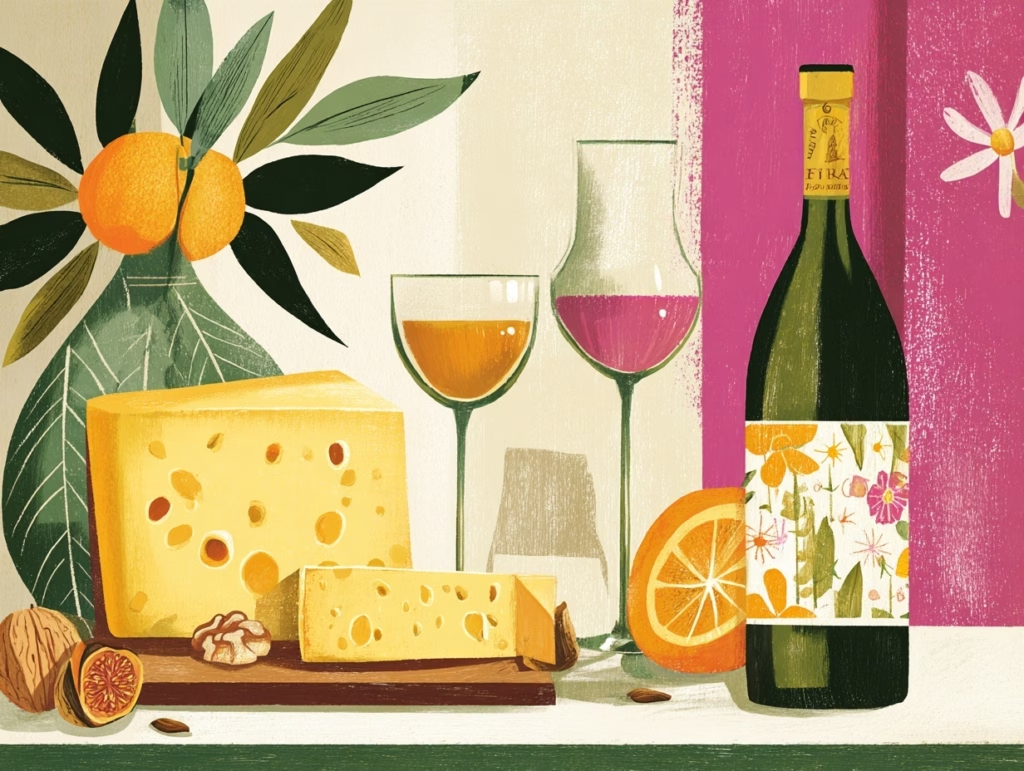
Port is a pairing powerhouse. Here’s how to deploy it strategically this holiday season:
Classic Cheese Board Port Pairings:
- Ruby Port + dark chocolate + Stilton blue cheese = mind-blowing
- Tawny Port + aged cheddar, aged Gouda, or Manchego = nutty heaven
- White Port + goat cheese, Brie, fresh fruit = elegant aperitif spread
Holiday Dessert Port Pairings:
- Ruby Port + chocolate anything (brownies, mousse, cake)
- Tawny Port + pecan pie, pumpkin pie, crème brûlée
- Tawny Port + anything with caramel or nuts
- Vintage Port + dark chocolate truffles (for special occasions)
Savory Port Pairings:
- Tawny Port + charcuterie, pâté, or foie gras
- White Port + salty almonds or olives (as aperitif)
- Ruby Port + blue cheese + walnuts = the holy trinity
💡 Pro Tip: Port and chocolate is the classic pairing, but Port and cheese is where the real magic happens. The saltiness of cheese cuts through Port’s sweetness perfectly.
Why Port Is Your Secret Holiday Weapon
Here’s why Port deserves a spot at every holiday gathering:
- It’s Crowd-Pleasing Many people who “don’t like wine” love Port. The sweetness and richness appeal to broader palates.
- It’s Affordable Luxury Unlike rare vintage Champagne or cult Napa Cabs, quality Port is surprisingly affordable. You can get excellent Tawny for $25-35.
- It Lasts Forever (Opened) Once opened, most last 1-2 weeks (Tawny) to several weeks (Ruby), unlike regular wine that’s toast after a few days. White Port is the exception: drink within a week.
- It’s Versatile Works as aperitif (White Port), with cheese courses, with dessert, or as dessert itself.
- It Makes You Look Sophisticated Show up with a 20-year Tawny, and suddenly you’re the wine-savvy friend with excellent taste.
Shopping for Port: What to Buy This Holiday Season
Best Entry-Level Ports (Under $25):
Best Mid-Range Ports ($25-50):
Splurge-Worthy Ports ($50+):
- Graham’s 20-Year Tawny
- Taylor’s 20-Year Tawny
- Any declared Vintage Port from recent great vintages (2016, 2017, 2011, 2007)
The Bottom Line: Why Port is Your Holiday Hero
Port wine is in a category of its own: simultaneously approachable and incredibly complex, perfect for holiday entertaining and cozy nights in. Whether you’re reaching for an affordable Ruby to pair with chocolate, splurging on a 20-year Tawny for your holiday dinner, or investing in Vintage Port to cellar, there’s a style for every occasion and budget.
Be a holiday hero and reach for Port. It pairs with everything on your dessert table, impresses dinner guests, and tastes like the holidays feel—warm, rich, and worth savoring.
So grab a bottle (or three), build that cheese board, and toast to discovering one of wine’s most underrated categories.