Thomas Jefferson: America’s First Wine Influencer
Discover how Thomas Jefferson became America's first wine influencer! From his Paris wine education to experimental Monticello vineyards, learn how TJ laid the foundation for Virginia's thriving wine scene.
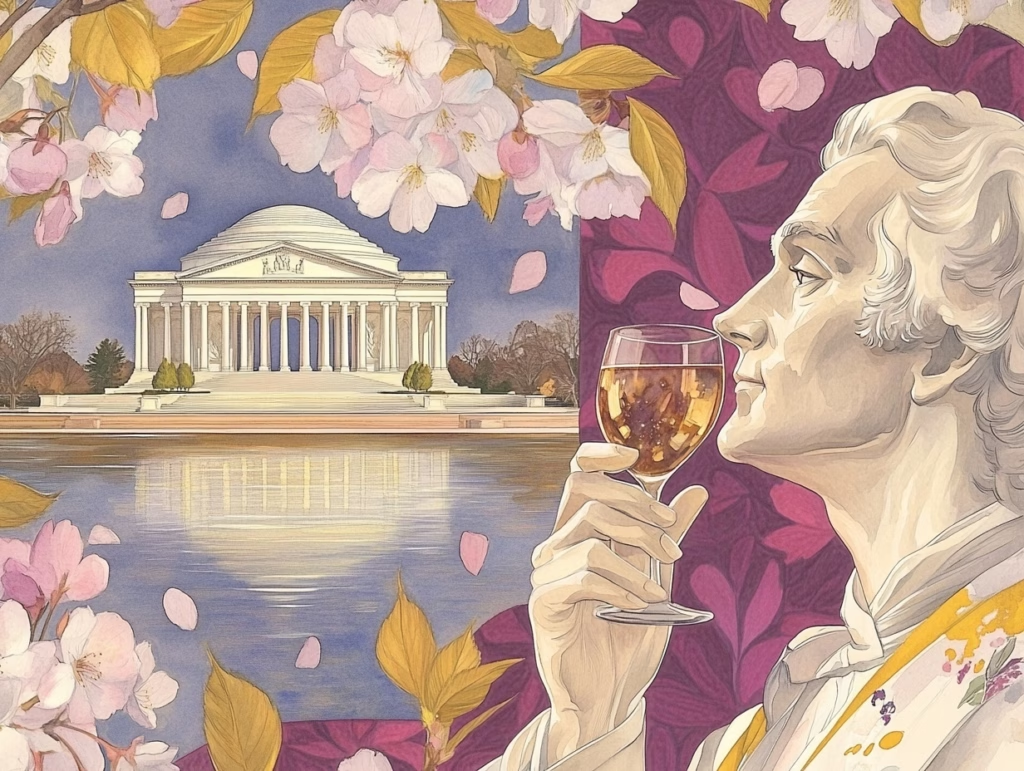
I was running past the Jefferson Memorial on D.C.’s Tidal Basin this past weekend and was thinking about how this founding father was basically the original wine girlie. Forget your favorite sommelier’s Instagram stories; Thomas Jefferson was building up America’s wine culture from scratch while also building America (NBD).
TJ wasn’t just writing the Declaration of Independence and designing Monticello. In his abundant spare time he was obsessing over Bordeaux vintages, planting experimental vineyards, and laying the groundwork for what would eventually become Virginia’s thriving wine scene. Talk about a Renaissance man with excellent taste.
Jefferson’s Wine Origin Story: From Paris with Love
Picture this: It’s the 1780s, and Jefferson is living his best diplomatic life in Paris as the U.S. Minister to France. While many of us would probably spend our time doing whatever’s the Colonial-era equivalent of taking blurry photos of the Eiffel Tower, Jefferson was deep-diving into French wine regions like a man on a mission.
What Jefferson Did in France:
- Toured Burgundy and Bordeaux like a wine influencer (before influencers or Instagram,existed)
- Befriended top châteaux owners (relationships matter!)
- Shipped cases back to America (DIY winery membership)
- Took detailed notes on terroir and winemaking (the OG wine blog)
He came back to Virginia with more than just diplomatic experience—he had a full-blown vision for American wine that would take centuries to realize.
Monticello: Jefferson’s Wine Laboratory
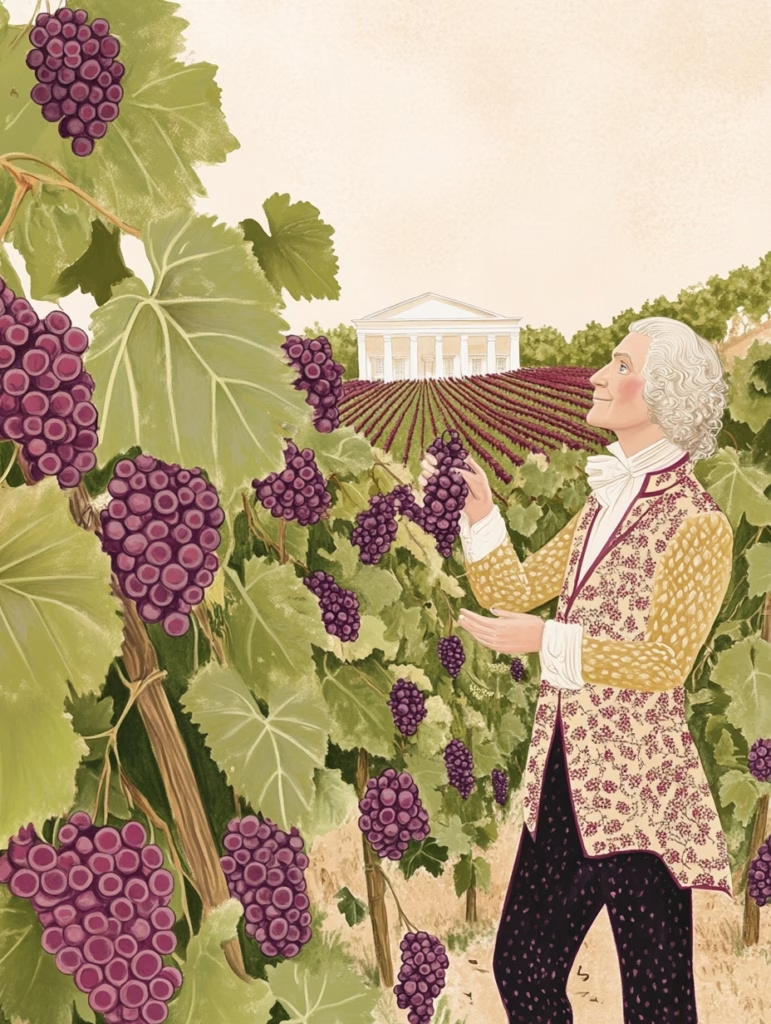
Back at Monticello, Jefferson turned the estate into America’s first serious wine experiment. Think of it as part vineyard, part research facility, part test kitchen to see if America could make world-class wine. He planted over 20 different grape varieties on his property, testing everything from European classics to native American grapes.
Jefferson’s Grape Experiments:
European varieties
Mostly failed (climate shock was real) – Jefferson planted 287 vines including 24 European grape varieties in his ambitious 1807 experiment. These included classics like Cabernet Sauvignon (which he called “black cluster”), Sangiovese, and Muscat Blanc (aka “white frontignac”). Many had probably never been grown in the New World before.
Native grapes
Better adapted but produced wines that were… let’s say “an acquired taste” – Jefferson experimented with Scuppernong (which he praised for its “fine aroma and chrystalline transparence”) and native fox grapes (Vitis labrusca). These survived Virginia’s climate but made wine that couldn’t compare to European styles.
Hybrid varieties
His most promising experiments – The Norton grape, developed by Dr. Daniel Norborne Norton around 1820, represented exactly what Jefferson was trying to achieve: a hybrid that combined native American resilience with European wine quality. Norton vines even made it to Monticello in Jefferson’s final years and can still be found at Virginia wineries.
Jefferson was seeding American wine development 200 years before it was a thing. Most of his vine experiments didn’t work out, but his persistence laid the foundation for Virginia’s wine scene.
Fast Forward to Today: Monticello AVA
Here’s where Jefferson’s wine dreams finally came to fruition. The Monticello American Viticultural Area (established in 1984) covers the same rolling hills where Jefferson planted his experimental vines. Today, this region is producing some seriously impressive wines that would probably make our third president weep with joy.
Monticello AVA Quick Facts:
- Location: Central Virginia, surrounding Charlottesville
- Climate: Continental climate with warm summers and cool nights (perfect for slow ripening)
- Signature grapes: Cabernet Franc, Petit Verdot, Viognier, Chardonnay
- Vibe: Elegant, food-friendly wines with European finesse
The irony? The region that frustrated Jefferson with its challenging growing conditions is now celebrated for producing wines with complexity and character rooted in those same challenges.
Virginia Wine’s Jefferson Moment
Jefferson believed that wine was essential to civilization (same), and he envisioned America as a wine-producing nation that could rival Europe. While it took a couple centuries to get there, Virginia is now the fifth-largest wine-producing state in the U.S., with over 300 wineries.
Why Jefferson Would Be Obsessed with Modern Virginia Wine:
- Viognier: Virginia’s signature white grape produces lush, floral wines that pair perfectly with the state’s cuisine
- Cabernet Franc: Thriving in Virginia’s climate, creating elegant reds with herbaceous complexity
- Sustainable practices: Many Virginia wineries are embracing organic and biodynamic farming
- Food pairing culture: Virginia wine is designed to complement local ingredients—exactly Jefferson’s vision
Beyond just planting grapes, Jefferson understood that great wine culture requires education, appreciation, and community. He believed that Americans should develop their palates and support domestic wine production.
How to Channel Jefferson’s Wine Energy This Fourth of July
Want to celebrate like the founding father who understood that life, liberty, and the pursuit of happiness definitely included great wine? Here’s your Jefferson-inspired wine lineup with specific bottles available on Wine.com:
Virginia Viognier
Toast to American innovation with the state’s signature white:
- Barboursville Reserve Viognier 2021 – From one of Virginia’s most acclaimed wineries, this unoaked beauty shows honeyed pear and passion fruit flavors with bright acidity
Monticello AVA Cabernet Franc
Sip wines literally grown where Jefferson experimented, including ones featured in his personal lab:
- Barboursville Reserve Cabernet Franc – Dark garnet with luscious red berry flavors and elegant tannins from Jefferson’s own backyard
Madeira – Jefferson’s go-to wine for special occasions (still excellent today)
Just as Madeira was the ultimate colonial wine—surviving long sea voyages and gracing the finest tables from Boston to Savannah—it remained Jefferson’s beverage of choice for toasting special occasions.
- Blandy’s 5 Years Sercial Dry Madeira – Perfect aperitif style with crisp, nutty notes
- Rare Wine Co. Historic Series Boston Bual – A tribute to American Madeira culture with rich, complex flavors
American Sparkling Wine
Because the U.S.A. can produce bubbles that say “Celebration” as much as anywhere else:
- Schramsberg Blanc de Blancs – Traditional method sparkler that proves American bubbles can rival Champagne
- Gloria Ferrer Blanc de Noirs – From Sonoma’s sparkling wine pioneers, elegant and food-friendly
The Bottom Line
Thomas Jefferson may not have succeeded in making great wine at Monticello, but his vision, persistence, and belief in American wine potential planted seeds that are still growing today. Every time you sip a Virginia Viognier or explore an American wine region, you’re participating in an experiment that started with a founding father who believed America could be great at literally everything—including wine.
So this Fourth of July, raise a glass to the man who spent his life proving that America deserves a seat at the wine table. Jefferson would definitely approve of your wine choices.