Why Are Some Wines So Expensive? A Peek Behind the Price Tag
We’ve all lingered in the wine aisle or hovered over an online cart, wondering: How can this bottle be $12, and that one $120? Is it marketing? Prestige? Or is there something actually in the bottle that justifies the cost?
We’ve all lingered in the wine aisle or hovered over an online cart, wondering: How can this bottle be $12, and that one $120? Is it marketing? Prestige? Or is there something actually in the bottle that justifies the cost?
Let’s uncork the truth. Wine pricing isn’t (completely) arbitrary—it’s a reflection of production, place, and yes, sometimes perception. Here’s what drives the cost of a bottle:
Growth and Production Factors Contributing to the Cost of Wine
Grape Growing Costs
Great wine starts in the vineyard, and quality farming isn’t cheap. Grapes from prestigious regions like Napa Valley or Puligny-Montrachet are grown on land that’s incredibly expensive. Many high-end producers also keep yields intentionally low—fewer grapes per vine, more concentrated flavor per grape. Add in labor-intensive farming practices like hand harvesting, organic or biodynamic cultivation, and canopy management, and the farming bill climbs fast.
Winemaking Techniques
Once the grapes are picked, the winemaking process adds another layer. Stainless steel fermentation and minimal handling are budget-friendly, but wines aged in new French oak barrels for 18+ months? Those barrels can cost $1,000+ each. Wines made with native yeast (which can be unpredictable), extended lees contact (for texture), or long macerations (for structure) all require more time, attention, and expertise. Every step that favors precision over efficiency nudges the price upward.
Time in the Cellar
The longer a wine is held before release, the more it costs the producer. Bottles aged for years before hitting shelves take up space, require climate-controlled storage, and delay revenue. Wines like Barolo, Brunello, or vintage Champagne often carry premium prices in part because they’ve been waiting in the wings for half a decade (or more).
Distribution and Other Post-Production Factors Contributing to the Cost of Wine
Packaging and Presentation
While we’re taught not to judge a wine by its label, premium packaging does affect the final cost. Heavy glass bottles, wax seals, embossed labels, and gift-ready boxes all add to production expenses. It’s not just about looking pretty on a dinner table—it signals intention and elevates the experience.
Place and Prestige
Wines from certain regions come with built-in price tags. Burgundy, Champagne, and cult California estates are expensive not just because of quality, but because of reputation, scarcity, and global demand. You’re paying for terroir, history, and that elusive magic called prestige.
Production Scale
Mass-market producers can offset costs across thousands of cases. Small, family-run wineries making just a few hundred cases? Not so much. Tiny productions mean each bottle carries a bigger slice of the overhead, even if the wine itself is simple and unpretentious.
Distribution and Imports
Let’s not forget the hidden costs—tariffs, shipping, importer markups, and distributor cuts all stack up before a wine even reaches your glass. That $40 bottle from a small Spanish bodega may have only cost $10 to make—but it traveled a long way to get here.
The good news? Expensive doesn’t always mean better, and great values are everywhere once you know what you like. Learn your palate, seek out under-the-radar regions, and find a wine shop you trust. Because at the end of the day, the best wine isn’t the priciest—it’s the one you love to drink.
Price Point Showdown: Oregon Pinot Noir Edition
Ever wondered if that $55 bottle is really that much better than the $20 one? We’re putting two beloved Oregon Pinot Noirs head-to-head to find out what your extra dollars actually buy you.
The Crowd-Pleaser: A to Z Pinot Noir ($18)
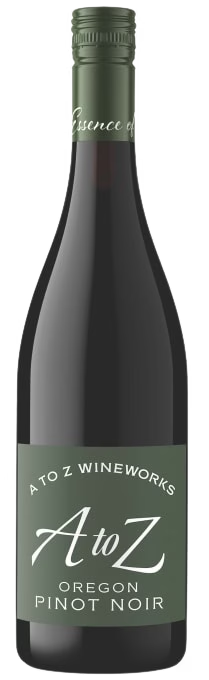
Think of this as your most reliable friend who brings good vibes to every gathering without trying too hard. A to Z Pinot Noir greets with a generous assembly of ripe black cherries, blackberries, strawberry jam, and pomegranate, layered with a touch of oak, vanilla, nutmeg, and black tea leaves. The structured tannins and fresh, balanced acidity provide focus and precision to the wine, leading to a lingering finish of cherry, purple flowers, and herbs.
Founded in 2002 by four Oregon wine industry veterans, A to Z proudly lives by their motto of “Aristocratic wines at Democratic prices.” But affordable doesn’t mean low quality: Wine Enthusiast awarded it 90 points, praising how “this widely available Oregon Pinot avoids the sort of winemaking tricks that take away detail and specificity.” As a five-time ‘Best for the World’ B Corp, they’ve built Oregon’s top-selling wine brand on sustainable practices and exceptional value.
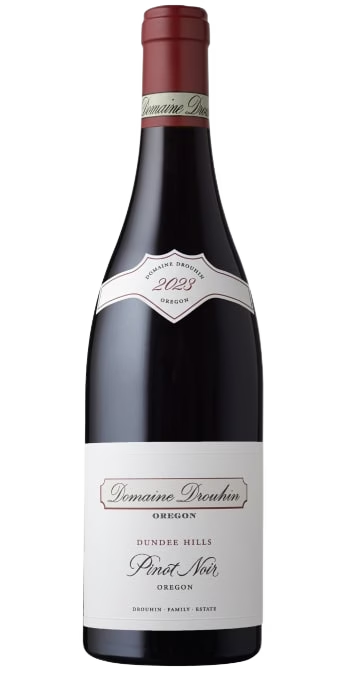
The Powerhouse: Domaine Drouhin Dundee Hills Pinot Noir ($50)
This is the French exchange student who somehow makes everyone else look more sophisticated just by existing. The Domaine Drouhin Dundee Hills Pinot Noir is bursting with black cherry and ripe sour cherry tones on the nose, with hints of dried violets and lightly roasted coffee beans, with added fresh raspberry, cranberry, and a decidedly earthy touch on the palate.
As noted in our prior blog post on the Willamette Valley, Domaine Drouhin Winemaker Véronique Drouhin-Boss brings decades of Burgundy expertise to this 235-acre estate atop the Dundee Hills, where Robert Drouhin’s vision of rivaling the great vineyards of Burgundy has been realized. Recent vintages have earned 94+ points from major critics.
The Cult Classic: Lingua Franca Mimi’s Mind Pinot Noir (~$100)
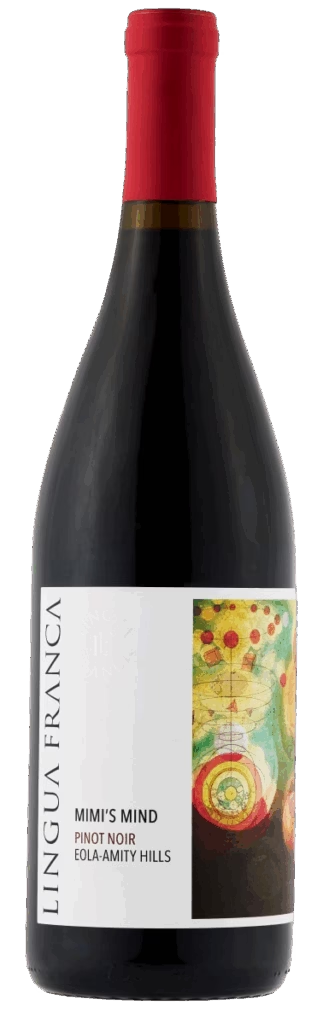
Sourced from Mimi Casteel’s meticulously farmed Hopewell Vineyard, the Lingua Franca Mimi’s Mind Pinot is composed entirely of Pinot Noir clone 667 and showcases an aromatic weave of bee pollen, wild berry, and rose that opens into a balanced palate. Those scents turn into flavors, along with cherries, fresh thyme, oregano, floral notes of rose petal and violet, rich mulberry, and overtones of aromatic spices including cinnamon, vanilla, and anise.
Co-founded by Master Sommelier Larry Stone, David Honig, and Burgundy legend Dominique Lafon, Lingua Franca hired brilliant young winemaker Thomas Savre (trained at top Burgundy domaines) to craft wines using regenerative agriculture principles. Critics consistently award it 93+ points, with Wine Spectator noting its “impressive core of bright acidity and finely groomed tannins.” The wine includes 50% whole cluster fermentation and 22% new French oak, creating a wine that “demands long-term aging” but rewards patience with exceptional complexity.
Why The Price Jumps? Here’s Where Your Money Goes
Vineyard Sourcing & Production Scale:
A to Z sources from diverse growing regions across Western Oregon for consistency and volume efficiency, while Domaine Drouhin focuses exclusively on their premium single-estate Dundee Hills site—think Target vs. boutique. And Mimi’s Mind? She comes from a single, meticulously farmed vineyard using regenerative agriculture principles. Mimi Casteel’s Hopewell Vineyard is legendary and loved among Oregon wine insiders.
Oak Investment
Domaine Drouhin uses approximately 20% new French oak barrels (custom made in Burgundy using oak from France’s best forests) and Mimi’s Mind ups that percentage slightly to 22%, while A to Z takes a more restrained approach to oak aging. Those premium barrels? They can cost over $1,000 each.
Artisanal Winemaking & Hands on Production
Véronique Drouhin-Boss brings decades of Old World expertise and the Drouhin family name carries serious weight in the wine world. You’re paying for that reputation and generational knowledge.
Only 350 cases made per vintage, with a pedigree that includes Master Sommelier Larry Stone and Burgundy legend Dominique Lafon. When buying Lingua Franca wines, you’re buying liquid bragging rights and serious cellar potential (critics suggest aging 2021-2035). Mimi’s Mind also uses 50% whole cluster fermentation (labor-intensive), single clone expression (Dijon 667), and a “hands-off” approach that lets nature do the talking. This isn’t mass production—it’s wine artistry.
The Bottom Line: Which Bottle Should You Buy?
- Choose A to Z Pinot Noir if: You want authentic Oregon Pinot character without the premium price tag, a wine that’s perfect for weeknight dinners or casual gatherings, and proven quality from Oregon’s top-selling wine brand. It’s the wine equivalent of your favorite jeans—reliable, versatile, and always a good choice.
- Choose Domaine Drouhin Dundee Hills if: You’re stepping up for a special dinner, want to experience classic Burgundian winemaking in Oregon, or you’re ready to explore what premium Pinot can offer. This is your elevated cocktail dress wine—sophisticated, polished, and perfect for impressing.
- Choose Lingua Franca Mimi’s Mind if: You’re a serious wine collector, celebrating a major milestone, or want to experience Oregon Pinot at its absolute peak expression. This is your couture gown wine—rare, artisanal, and designed to create unforgettable moments. Fair warning: this wine needs time to fully reveal its magic, so plan to cellar it or decant generously.
All three bottles available on wine.com — perfect for your own epic tasting to see how Oregon Pinot Noir evolves across price points. Spoiler alert: they’re all delicious, just in very different ways!