Wine Book Guide: Best Wine Education Books for Black Friday 2025 and the Holiday Season
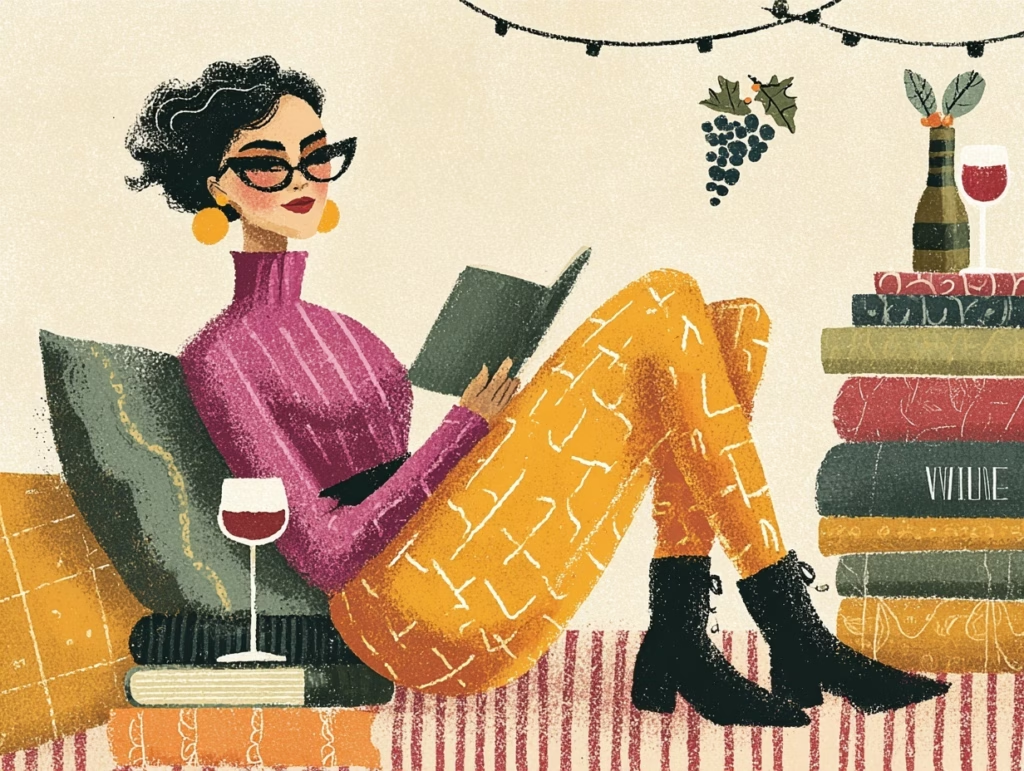
Here’s what I love about wine books: they’re the perfect complement to everything you’re learning here on the blog. While Vive le Vin gives you approachable, real-world wine knowledge you can use immediately (how to choose a order with confidence, what bottles to celebrate with, which regions are worth exploring), books offer something different—deep dives, comprehensive references, and the kind of detailed information you want to revisit again and again. Books are your wine library—resources you keep on hand for when you want to go deeper, study a specific region, or have a reference to consult while shopping.
The wine book market has evolved dramatically in recent years. We’ve moved from text-heavy tomes written exclusively for sommeliers into beautiful, visual guides that make learning feel less like studying and more like browsing inspiration. Books like Wine Folly revolutionized wine education with infographics that explain complex concepts in seconds. Meanwhile, classics like Hugh Johnson’s Pocket Wine Book remain essential because they’re updated annually with current vintage information—real-world buying advice that even the most comprehensive encyclopedia can’t match.
Black Friday typically brings 30-40% discounts on wine education books across major retailers, making this the ideal time to build your wine library without the guilt of spending $60 on a single book.
Who Actually Needs Wine Books?
You might need wine books if you’re:
- A self-directed learner who’d rather read than take classes (hello, introverts)
- Taking WSET courses and need supplemental references
- Planning wine region travel and want context beyond “this tastes good”
- Gift shopping for someone whose wine enthusiasm has reached “serious hobby” status
- Tired of feeling intimidated in wine shops or staring blankly at restaurant wine lists
- The friend who always gets asked “what should I bring?” and wants confident answers
What to Consider When Buying Wine Books
Think about your learning style first. Visual learners thrive with Wine Folly’s infographic approach. People who want comprehensive A-Z references need The Wine Bible or World Atlas of Wine. If you’re someone who buys wine frequently and wants practical purchasing advice, an annually updated pocket guide serves you better than beautiful but static coffee table books.
Also consider specialization versus breadth. Do you want broad wine knowledge, or are you drilling deep into specific regions like Burgundy or Champagne? And if you’re just looking for a good story, look to options by Victoria James and Bianca Bosker, who bring unique voices to wine storytelling while teaching you substantial wine knowledge along the way.
For Visual Learners
Wine education was revolutionized the moment someone realized that infographics could replace walls of text. Visual guides like Wine Folly transformed wine from an intimidating subject requiring years of study into something you can grasp in minutes through color-coded charts, illustrated grape variety guides, and maps that actually make sense. If you’ve ever looked at a traditional wine book and felt overwhelmed by dense paragraphs about tannin structure, visual learning might be your path to wine confidence.
Wine Folly: The Master Guide (Magnum Edition), by Madeline Puckette & Justin Hammack
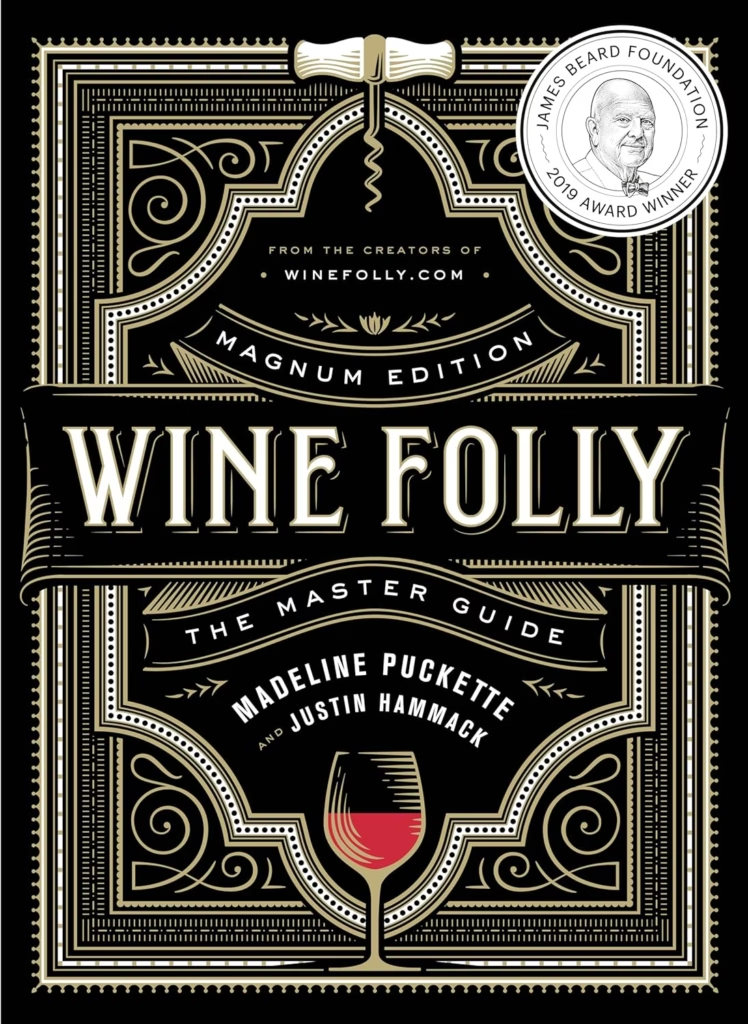
- Format: 400+ pages of visual wine education
- Coverage: 100+ wine grapes and major regions worldwide
- Style: Infographic-based—perfect for visual learners
- Perfect For: Beginners with no prior wine knowledge required. Also coffee table worthy, so guests will actually pick it up and browse (sneaky wine education for your friends).
If Wine Folly’s Instagram account changed your relationship with wine, the book is that energy in comprehensive physical form. Every concept is broken down visually—grape characteristics, regional maps, flavor profiles, food pairings. It’s the wine education equivalent of having everything translated into your native visual language.
Wine Simple: A Totally Approachable Guide from a World-Class Sommelier, by Aldo Sohm
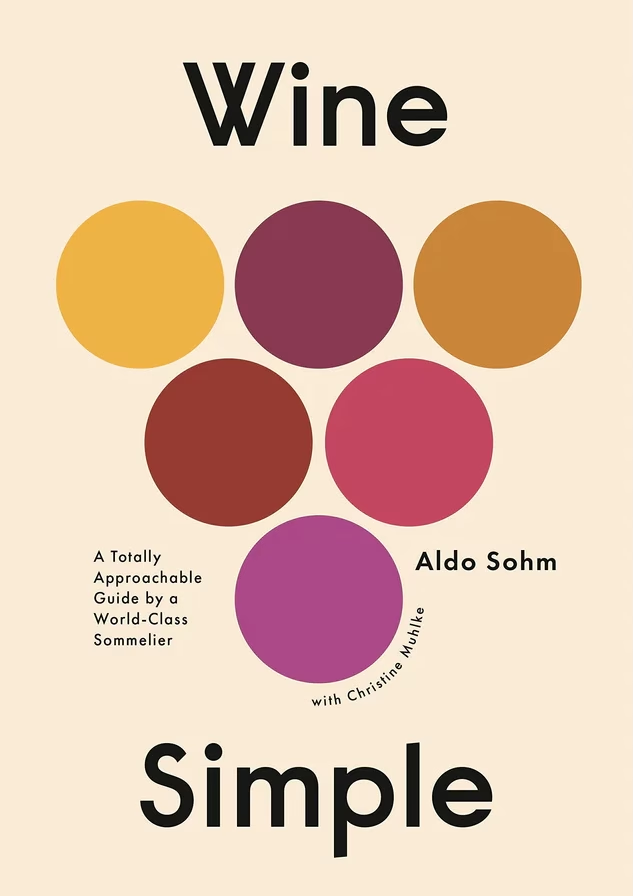
- Format: 400+ pages with stunning photography and clean, modern design
- Coverage: Wine fundamentals, grape varieties, major regions, food pairing, wine service, building a collection
- Style: Visual and conversational—world-class sommelier knowledge made genuinely accessible
- Perfect For: Beginners who want expert guidance without intimidation, visual learners who appreciate beautiful photography over charts, anyone who’s ever felt talked down to by wine snobs
Aldo Sohm was named Best Sommelier in the World finalist and has worked at Le Bernardin (one of NYC’s most prestigious restaurants) for years. What makes this book special is how he distills decades of elite sommelier experience into advice that feels like chatting with a knowledgeable friend rather than being lectured. The photography is clean, modern, and Instagram-worthy—but the real value is in how Sohm breaks down complex topics. He explains why certain wines pair with specific foods, how to taste wine properly without feeling pretentious, which wines to buy at different price points, and how to start a collection even if you live in a small apartment. It’s Wine Folly’s visual accessibility meets insider sommelier expertise.
Rebel School of Wine: A Visual Guide to Drinking with Confidence, by Tyler Balliet
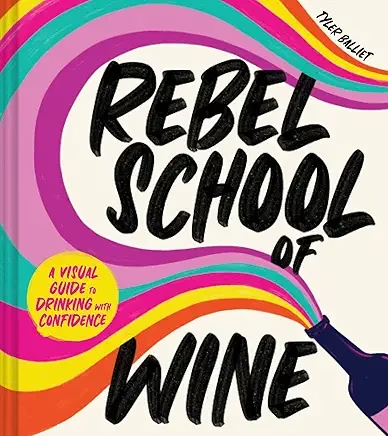
- Format: 304 pages with hand-drawn illustrations and dynamic graphics
- Coverage: Wine regions (from France to Algeria to Mexico), winemaking processes, economics of wine, climate change impacts, how to select bottles, modern wine industry
- Style: Image-forward, cheeky but reliable, focused on banishing wine gatekeeping
- Perfect For: Gen Z and Millennial wine drinkers who want knowledge without pretension
Tyler Balliet (co-founder of Rosé Mansion and Wine Riot) is on a mission wine fun and accessible. This book addresses modern wine concerns: how capitalism drives up prices, climate change, new generation of winemakers. It also covers lesser-known wine regions (Lebanon, Algeria, Mexico) alongside the classics. The illustrations give it “back-to-school-colorful-doodles-energy.” It’s visually engaging without sacrificing substance.
Shop Rebel School of Wine on Amazon
For Quick Reference
The best wine book is the one you actually use, and pocket guides earn their place by being small enough to throw in your bag before heading to the wine shop or restaurant. Updated annually with current vintage ratings and new producer discoveries, these compact guides offer relevant, right-now information about what’s actually good this year. Think of them as your wine shopping wingman—small, portable, and full of practical advice that helps you make confident decisions in real-world situations.
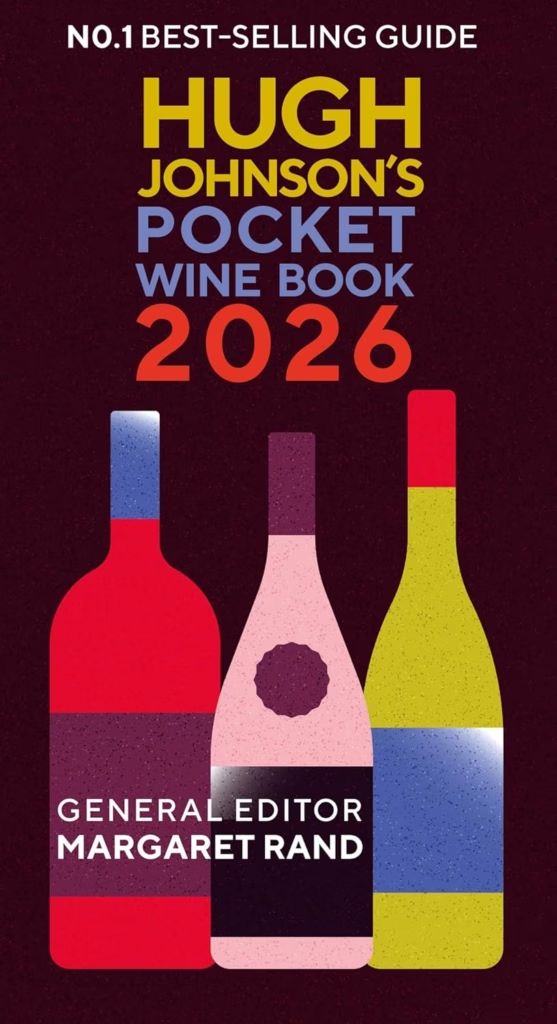
Hugh Johnson’s Pocket Wine Book 202, by Margaret Rand
- Format: Compact pocket guide, updated annually since 1977
- Coverage: 8,000+ wines and producers reviewed with vintage charts included
- Perfect for: Wine shopping trips, restaurant wine list navigation, building your “wines to try” list
This is the book professional sommeliers actually carry—not the 1,000-page encyclopedia, but the practical pocket guide with current information. While your dining companion is Googling “is 2019 Bordeaux good,” you’re casually consulting your pocket guide written by a real wine expert.
Shop Hugh Johnson’s Pocket Wine Book on Amazon
For Comprehensive Study
Some wine books are meant to be read cover-to-cover; others are meant to be lived with for years, serving as the definitive reference you return to again and again. These comprehensive tomes represent decades of research, hundreds of thousands of bottles tasted, and authoritative knowledge compiled by the world’s most respected wine critics and educators. They’re investments—both financially and intellectually—but for serious students pursuing WSET certification, collectors building cellars, or anyone who wants to truly understand the global landscape of wine, these books become indispensable foundations that inform every wine decision you make for years to come.
The World Atlas of Wine (8th Edition), by Hugh Johnson & Jancis Robinson
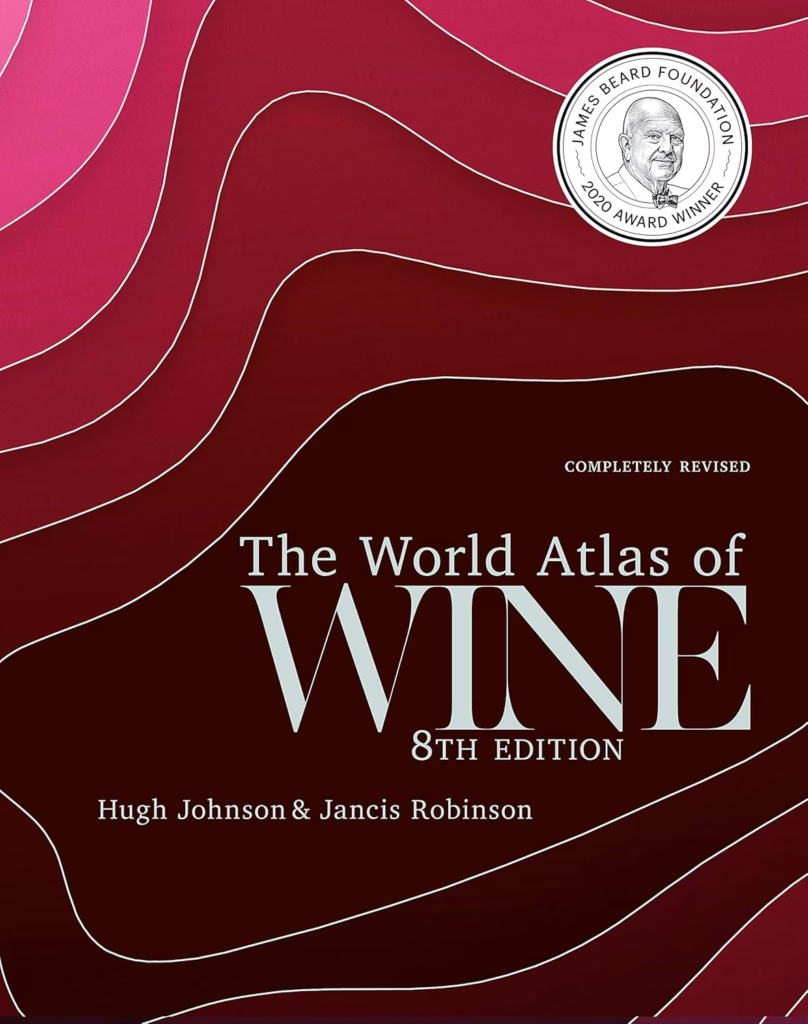
- Format: 416 pages of detailed maps and regional analysis
- Coverage: Every major wine region worldwide with precise cartography
- Best For: Serious students, WSET candidates, collectors who want to understand terroir at a granular level
Jancis Robinson is wine royalty whose work has defined modern wine criticism. This atlas has been the definitive wine geography reference since 1971. Those maps aren’t just decorative; they show you the exact hill in Burgundy where grand cru begins, or which side of the river produces the best Bordeaux. It’s the kind of detail that transforms your understanding of why wines from neighboring vineyards can taste so dramatically different.
Shop World Atlas of Wine on Amazon
The Wine Bible (3rd Edition), by Karen MacNeil
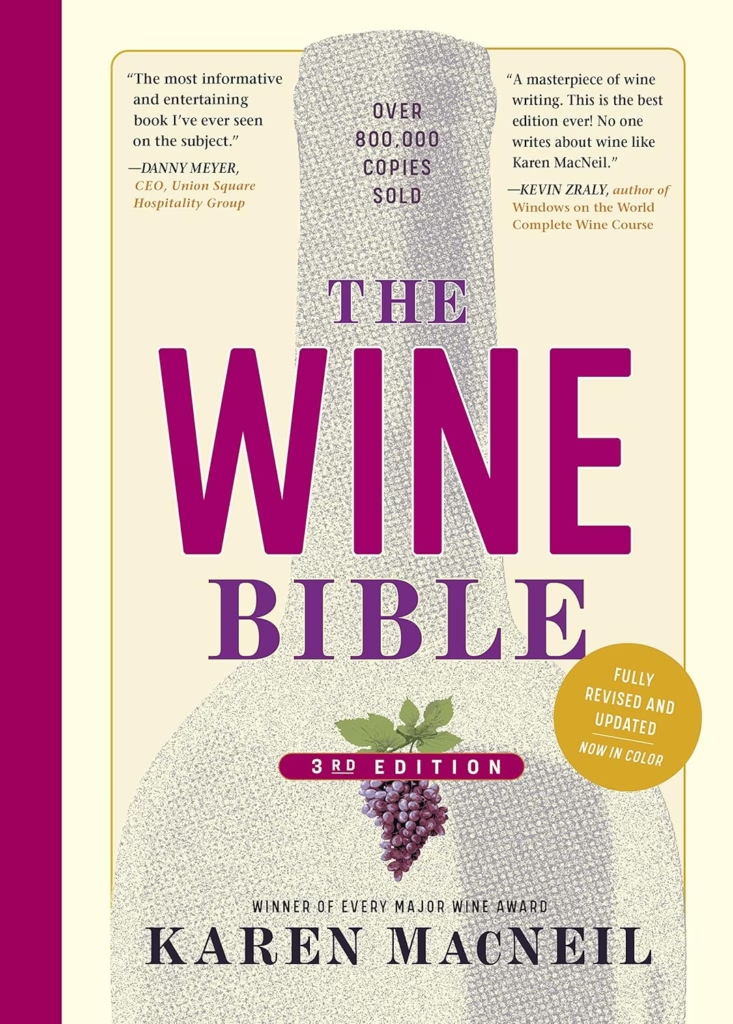
- Format: 992 pages of exhaustive wine coverage
- Coverage: Old World and New World wines, food pairing suggestions, winemaking processes
- Best For: Anyone who wants one comprehensive resource instead of five specialized books
Karen MacNeil’s encyclopedic guide covers everything from major wine regions to obscure appellations, written in an accessible style that never feels condescending. This is a “read a chapter at a time over months” book—not a weekend read, but a reference you’ll return to for years. The third edition includes updated information on climate change impacts, emerging wine regions, and modern winemaking techniques.
The Sommelier’s Atlas of Taste: A Field Guide to the Great Wines of Europe, by Rajat Parr & Jordan Mackay
- Format: 400+ pages with stunning photography
- Coverage: France, Italy, Germany, Austria, Spain—deep dive into terroir differences and regional taste characteristics
- Best For: Aspiring sommeliers, blind tasting enthusiasts, serious collectors who want to understand what wines from specific regions should actually taste like
What makes this book unique is its focus on taste rather than just geography. Most wine books tell you where grapes grow; this one tells you what they taste like and why. It describes the differences between Chablis’ seven grand crus and forty premier crus with the kind of granular detail that helps you understand why that $200 Burgundy tastes so different from the $40 bottle. Rajat Parr won the James Beard Award for his previous book “Secrets of the Sommeliers,” and this builds on that expertise with even more detailed terroir analysis.
Shop Sommelier’s Atlas of Taste on Amazon
For Science & Chemistry Geeks
If you’re the kind of person who wants to understand not just what you’re tasting but why at a molecular level, traditional wine books can feel frustratingly vague. Scientific wine literature bridges that gap, explaining the chemistry of fermentation, the physiology of taste perception, the biochemistry of flavor compounds, and the precise mechanisms behind why wine smells like “green pepper” or tastes “minerally.” These books transform wine from poetic mystery into fascinating applied science—perfect for the analytically minded who find genuine pleasure in understanding exactly how malolactic fermentation converts sharp malic acid into softer lactic acid, or why certain soil compositions produce specific aromatic compounds in grapes.
The Science of Wine: From Vine to Glass (3rd Edition), by Jamie Goode
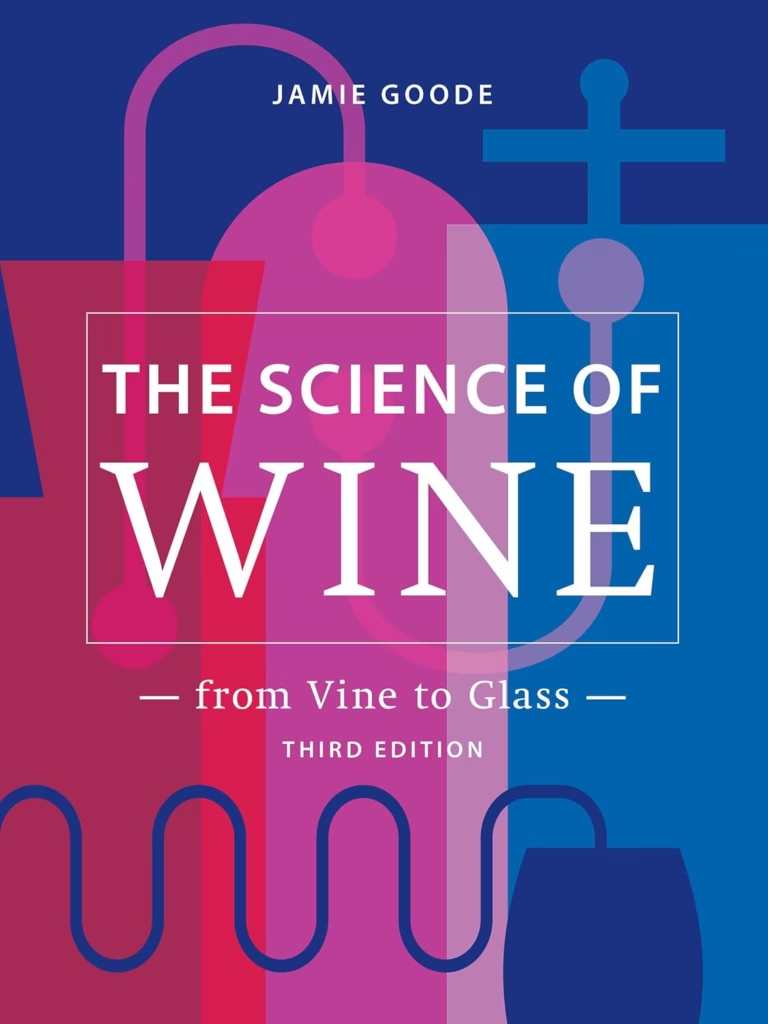
- Format: 224 pages of accessible science writing about wine chemistry and physiology
- Coverage: Chemistry of flavor explained, tasting physiology breakdown, fermentation biochemistry, terroir science
- Best For: STEM-minded wine lovers, homebrewers, anyone who loved chemistry class and wants to apply it to wine
Finally, someone explaining why malolactic fermentation makes wine taste “buttery” (it’s diacetyl, the same compound in movie theater popcorn butter) instead of just vaguely saying “it’s the winemaking process.” Jamie Goode breaks down complex scientific concepts into understandable explanations without dumbing them down. You’ll learn about methoxypyrazines (responsible for “green pepper” aromas in underripe Cabernet), how oak lactones create vanilla flavors, and the actual chemistry behind “minerality” in wine.
Shop The Science of Wine on Amazon
Flawless: Understanding Faults in Wine, by Jamie Goode
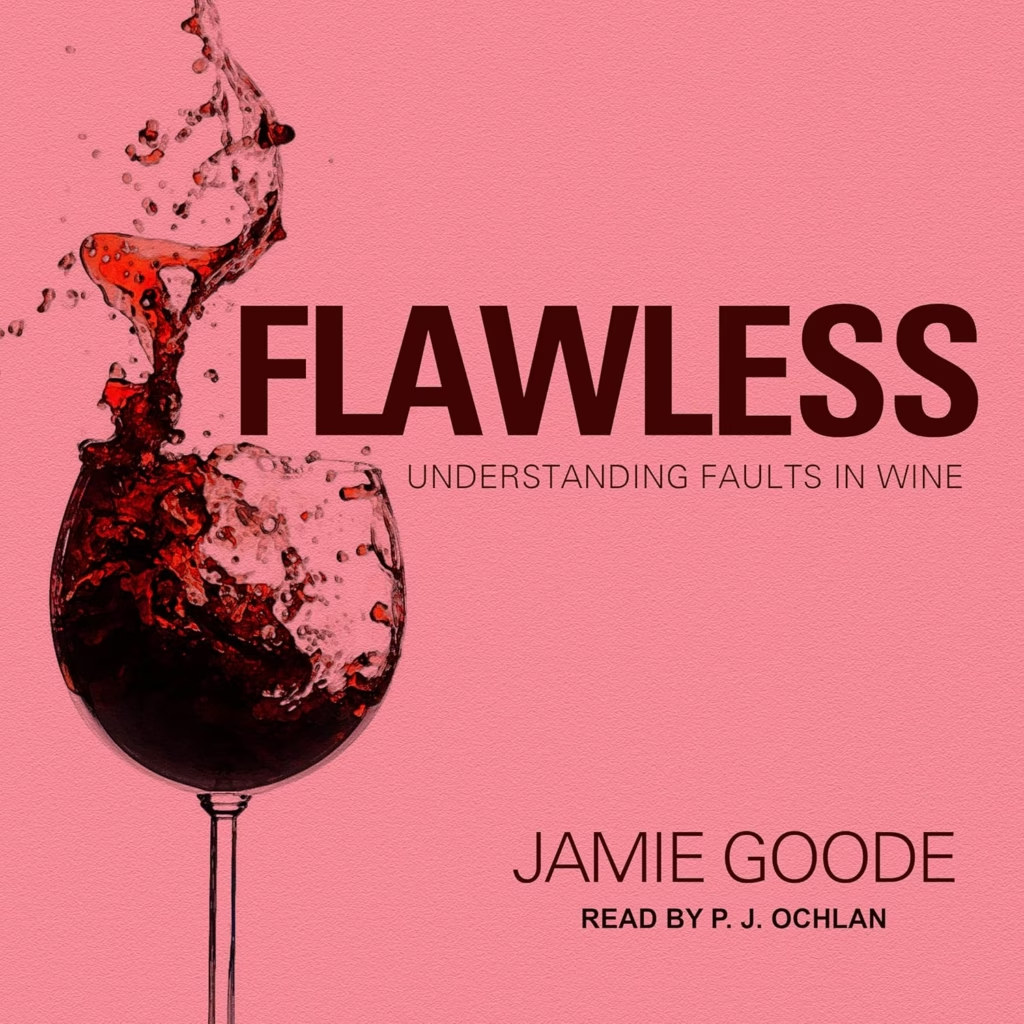
- Format: 176 pages dedicated entirely to wine faults—how to identify them, what causes them, and why they matter
- Coverage: Cork taint (TCA), Brett, volatile acidity, oxidation, reduction, light strike, smoke taint, and more
- Best For: Serious wine students, anyone who’s ever wondered “is this wine bad or do I just not like it?”, wine professionals, quality control enthusiasts
This is the only book dedicated entirely to wine faults, and it’s surprisingly fascinating. Jamie Goode explains the science behind each fault—what’s happening chemically, how to identify it through sight/smell/taste, and at what threshold it becomes a problem versus just a characteristic. You’ll learn why some “Brett” (Brettanomyces) is desirable in certain wines but ruins others, how to distinguish intentional oxidative aging from accidental oxidation, and why corked wine smells like wet cardboard (it’s 2,4,6-trichloroanisole if you want to get technical).
This book has genuinely improved my ability to assess wine quality and articulate when something is objectively flawed versus just not my style—a crucial skill for anyone spending serious money on wine.
For Wine Storytelling & Behind-the-Scenes
The newest evolution in wine education isn’t happening in textbooks or technical manuals—it’s happening in narrative memoirs that pull back the velvet curtain on the wine industry. These books represent a fundamental shift in how we learn about wine: instead of approaching it as an academic subject to be mastered, they treat wine as a living, breathing culture full of obsessive personalities, institutional problems, and transformative experiences.
You’ll learn from these memoirs as you would from traditional educational books—maybe more, because the information sticks when it’s woven into compelling stories rather than presented as facts to memorize. And bonus: they’re genuine page-turners you’ll want to read cover-to-cover.
Cork Dork: A Wine-Fueled Adventure Among the Obsessive Sommeliers, Big Bottle Hunters, and Rogue Scientists Who Taught Me to Live for Taste, by Bianca Bosker
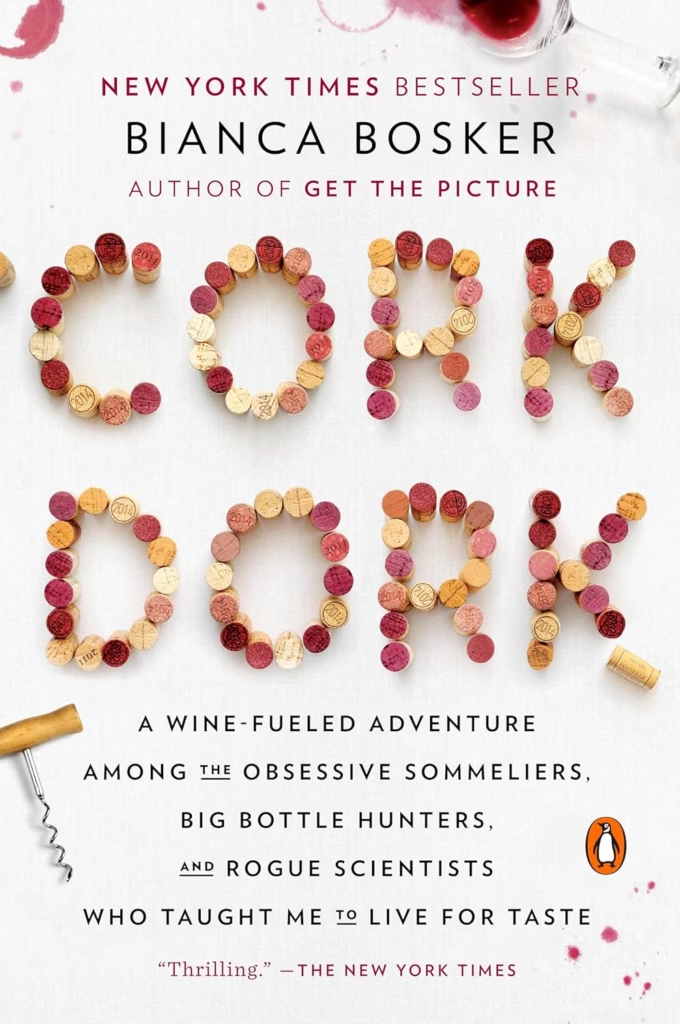
- Coverage: Award-winning journalist quits her job to become a sommelier, embedding herself in NYC’s elite wine world for 18 months of gonzo journalism meets wine education
- What You’ll Learn: How professional sommeliers train their palates, the science of taste and smell, wine industry insider culture, blind tasting techniques, why wine experts are so obsessive (and how they got that way)
- Comparable to: “Kitchen Confidential” meets “Salt Fat Acid Heat”—behind-the-scenes industry access mixed with genuine education
- Best For: Anyone intimidated by traditional wine books, aspiring sommeliers, people interested in the psychology of expertise and how anyone can train themselves to taste more intentionally
Bianca Bosker approaches wine with journalist curiosity rather than reverence, which makes her discoveries feel accessible rather than gatekept. She trains with obsessive sommeliers, attends secret blind tastings, learns to identify wines by texture alone, and asks the questions beginners actually want answered.
Wine Girl: The Obstacles, Humiliations, and Triumphs of America’s Youngest Sommelier, by Victoria James
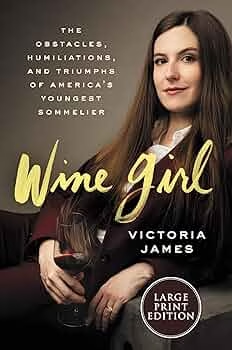
- Coverage: Victoria James became America’s youngest sommelier at age 21 while navigating a traumatic childhood and the notoriously toxic NYC restaurant industry—this is her raw, honest memoir about that journey
- What You’ll Learn: The realities of working as a sommelier in Michelin-starred restaurants, wine program management and pricing strategies, the path to sommelier certification, insider knowledge of how high-end restaurants select and mark up wine, dealing with workplace harassment in hospitality
- Content Warning: Addresses sexual harassment and assault in the restaurant industry with candid honesty; includes discussion of childhood trauma
- Best For: Women in hospitality industries, anyone interested in restaurant culture behind the scenes, readers who appreciate resilience stories with substance, people who want honest accounts of career challenges
This isn’t your typical “I fell in love with wine in Tuscany” memoir. Victoria’s path to becoming Food & Wine’s 2018 Sommelier of the Year included fighting to be taken seriously in a male-dominated industry while dealing with harassment that’s endemic to restaurant culture. She co-founded Wine Empowered, a non-profit fighting workplace abuse in hospitality, and this book is both wine education and industry exposé. You’ll learn genuine sommelier skills while understanding the human cost of restaurant glamour.
For the Aesthete: Gorgeous Coffee Table Books
Not every wine book needs to be educational in the traditional sense. Some books are meant to be beautiful objects in their own right—meant to inspire wanderlust, celebrate wine through stunning design and photography, and live on your coffee table as conversation pieces. These are Taschen-level productions with museum-quality printing, heavyweight paper stock, and the kind of visual storytelling that makes you want to book flights and tour wine regions. They’re objets d’art that happen to be about wine, not textbooks you’ll mark up with notes.
Dalí. The Wines of Gala, by Salvador Dalí (Taschen Edition)
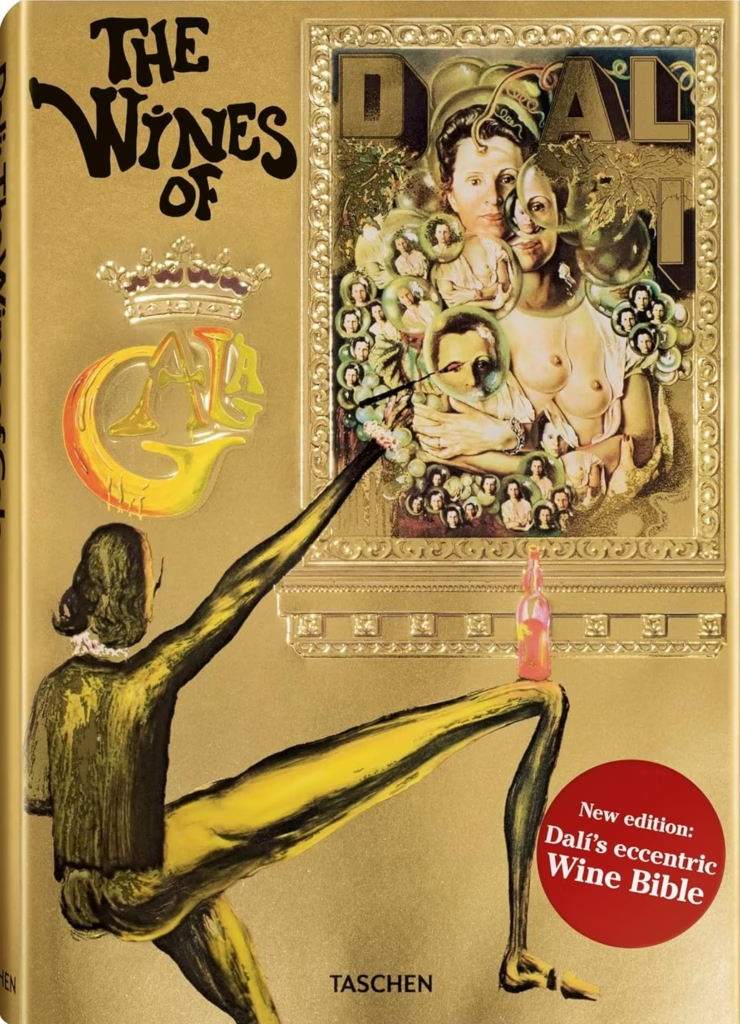
- Format: Surrealist wine manifesto organized by emotional sensation rather than traditional wine categories
- Coverage: Wines categorized as “Wines of Frivolity,” “Wines of Light,” “Wines of the Impossible,” etc., with 140+ original Dalí illustrations
- Why it’s special: This is Salvador Dalí’s follow-up to his cult cookbook “Les Dîners de Gala,” and it’s gloriously weird. Instead of organizing wine by region or varietal, Dalí organizes them by the sensations and emotions they evoke. Winner of the 2018 Gourmand World Cookbook Awards. It’s part art book, part wine philosophy, entirely Dalí.
- Perfect for: Art lovers, Surrealism enthusiasts, anyone who wants wine appreciation that’s as visually stunning as it is unconventional, coffee table centerpiece hunters
Shop Dalí Wines of Gala on Amazon
Living with Wine: Passionate Collectors, Sophisticated Cellars, and Other Drunken Endeavors, by Samantha Nestor
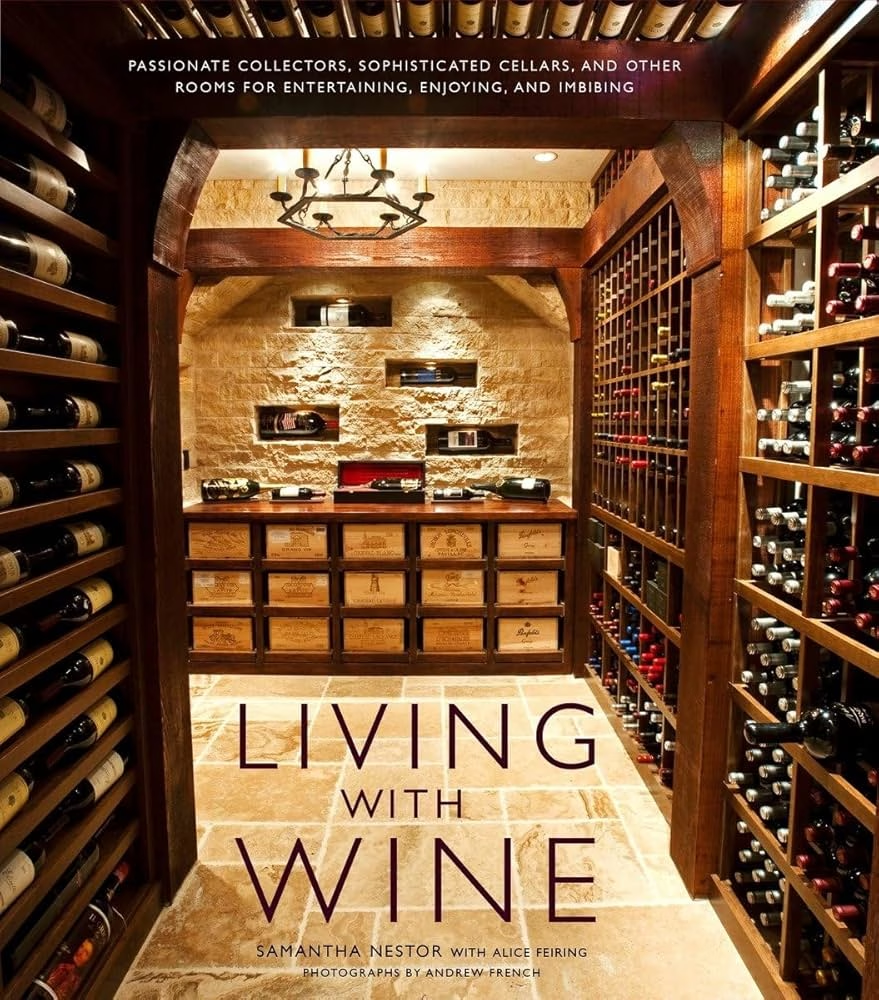
- Format: Photographic tour of America’s most impressive private wine cellars—from under-staircase conversions to 20,000-bottle collections
- Coverage: Part architecture book, part wine lifestyle documentation, entirely aspirational
- Why it’s special: Ever wondered what serious collectors’ cellars look like? This book takes you inside private wine spaces ranging from modest but clever storage solutions to museum-quality installations.
- Perfect for: Design enthusiasts, collectors seeking cellar inspiration, anyone who’s ever fantasized about proper wine storage, people who love aspirational lifestyle photography
Shop Living with Wine on Amazon
Champagne: The Essential Guide to the Wines, Producers, and Terroirs of the Iconic Region (Boxed Book & Map Set), by Peter Liem
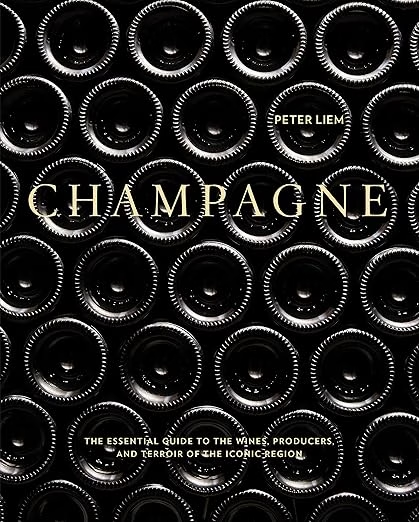
- Format: Museum-quality boxed set with pullout drawer containing seven large-format vintage vineyard maps
- Coverage: The Louis Larmat maps (commissioned by the French government in the 1940s, never before published in English—”rare as hen’s teeth”) plus modern terroir-focused Champagne guide
- Why it’s special: Triple award winner (James Beard, André Simon Drink Book, IACP Cookbook). While it’s gorgeous enough for coffee table display, this is also genuinely educational—Peter Liem is the authority on Champagne terroir. The maps alone are worth the price for serious Champagne lovers.
- Perfect for: Champagne enthusiasts, map lovers, serious collectors, anyone planning Champagne region travel, gift-giving when you want to make a serious impression
Shop Champagne Boxed Set on Amazon
The Bottom Line: Building Your Wine Library
The beauty of wine books is that they serve different purposes at different stages of your wine journey. You don’t need all of them—but having the right mix creates a comprehensive home wine education.
- If you’re just starting out: Begin with Wine Folly for visual learning and Hugh Johnson’s Pocket Wine Book for practical shopping guidance. These two give you both foundational knowledge and real-world application.
- If you’re getting serious: Add The World Atlas of Wine or The Wine Bible as your comprehensive reference. Choose based on whether you’re more interested in geography/terroir (Atlas) or broad encyclopedic coverage (Bible).
- If you want to understand wine at a deeper level: The Science of Wine explains the chemistry, while Flawless teaches you to identify quality issues. These transform you from casual enthusiast to informed critic.
- If you prefer learning through stories: Cork Dork and Wine Girl teach wine knowledge through compelling narratives. You’ll absorb information naturally while being entertained.
- If you want something beautiful: The coffee table books (Dalí, Living with Wine, Champagne boxed set) celebrate wine as culture and art, not just beverage. They’re meant to inspire rather than educate—though you’ll learn plenty along the way.
- If you’re gift shopping: Wine Folly, Cork Dork, or the Champagne boxed set (depending on budget) make exceptional gifts that show you understand the recipient’s wine interests.
How to Shop Wine Books This Black Friday
Black Friday through Cyber Monday typically brings 30-40% discounts on wine books across Amazon, Barnes & Noble, and independent bookshops. While Amazon links are provided for convenience, many of these titles are available through independent bookstores. If you have a favorite local shop, they often price-match online retailers during Black Friday while giving you the satisfaction of supporting small businesses.
Ready to Build Your Wine Library?
Think of wine books as complementary to everything you’re learning here on Vive le Vin. The blog gives you approachable, immediately applicable wine knowledge. Books give you depth, references, and the comprehensive information you’ll return to again and again as your wine journey evolves.
This Black Friday and holiday season, invest in your wine education. Your future self—standing confidently in the wine aisle, understanding what you’re ordering at restaurants, hosting dinner parties with thoughtfully selected wines—will thank you.
Want more holiday wine shopping guides? Check out the complete Wine Lover’s Holiday Shopping Series for glassware recommendations, wine preservation systems, temperature control solutions, and more expert buying guides.
Disclosure: This post contains affiliate links to Amazon. When you purchase through these links, Vive le Vin may earn a small commission at no additional cost to you, which helps keep the wine content flowing. All recommendations are based on genuine research and personal enthusiasm for wine education. These books genuinely complement what you’re learning on the blog, and several are references I consult regularly when researching posts.