
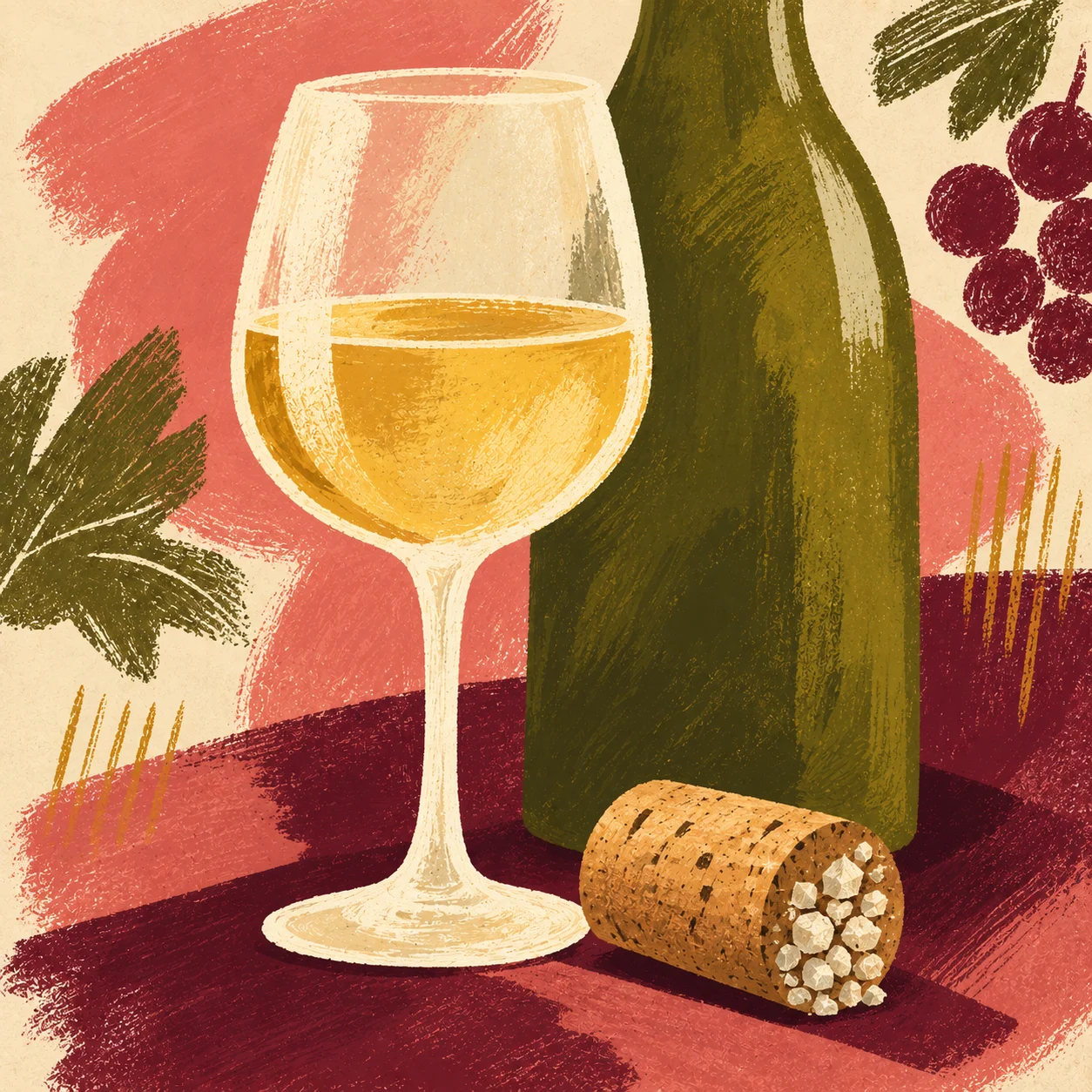
You open a bottle, spot a little sparkle on the cork, and immediately have a question. Fair. Crystals weren’t on the tasting note.
Those little deposits may be wine diamonds, the rather glamorous nickname for tartrate crystals. The name is more exciting than the explanation, but the explanation is useful.
What are wine diamonds, exactly?
One common kind is potassium bitartrate, which forms from substances naturally present in grapes. It can collect on the cork or settle at the bottom of a bottle. In red wine, the crystals can pick up pigment and look dark red. So your bottle’s little bit of sparkle doesn’t necessarily arrive in clear, jewelry-counter white. The Australian Wine Research Institute explains the chemistry and appearance.
Tartrate crystals themselves are harmless. The Canadian Food Inspection Agency notes that they don’t affect the wine’s taste, though they can feel gritty. I’m here for interesting texture in a wine, but a mouthful of crystals isn’t the goal.
Why do they show up?
Temperature is part of the story. Potassium bitartrate is less soluble as wine gets colder, making crystal formation more likely. The wine’s composition matters, too, so two bottles can behave differently in the same fridge.
Winemakers can encourage those crystals to form before bottling by chilling the wine, then separating it from the deposit. That’s cold stabilization: a little advance housekeeping so the crystals stay at the winery. AWRI’s guide covers the process.
What should I do with them?
For known tartrate crystals, the CFIA suggests wiping deposits from the cork or decanting through cheesecloth. If you’re unsure what the material is, leave the wine unserved and check with the seller or producer; a photograph alone isn’t a reason to assume every deposit is a wine diamond.
And remember that “sediment” is a broader category. Wine can also contain deposits from pigments and other material, as AWRI’s guide to wine deposits explains.
A useful little wine fact for the next time the cork comes with an accessory. No tasting exam required.
Have you ever found wine diamonds in a bottle?
Vive le Vin may earn a commission from affiliate links on this site, at no extra cost to you.